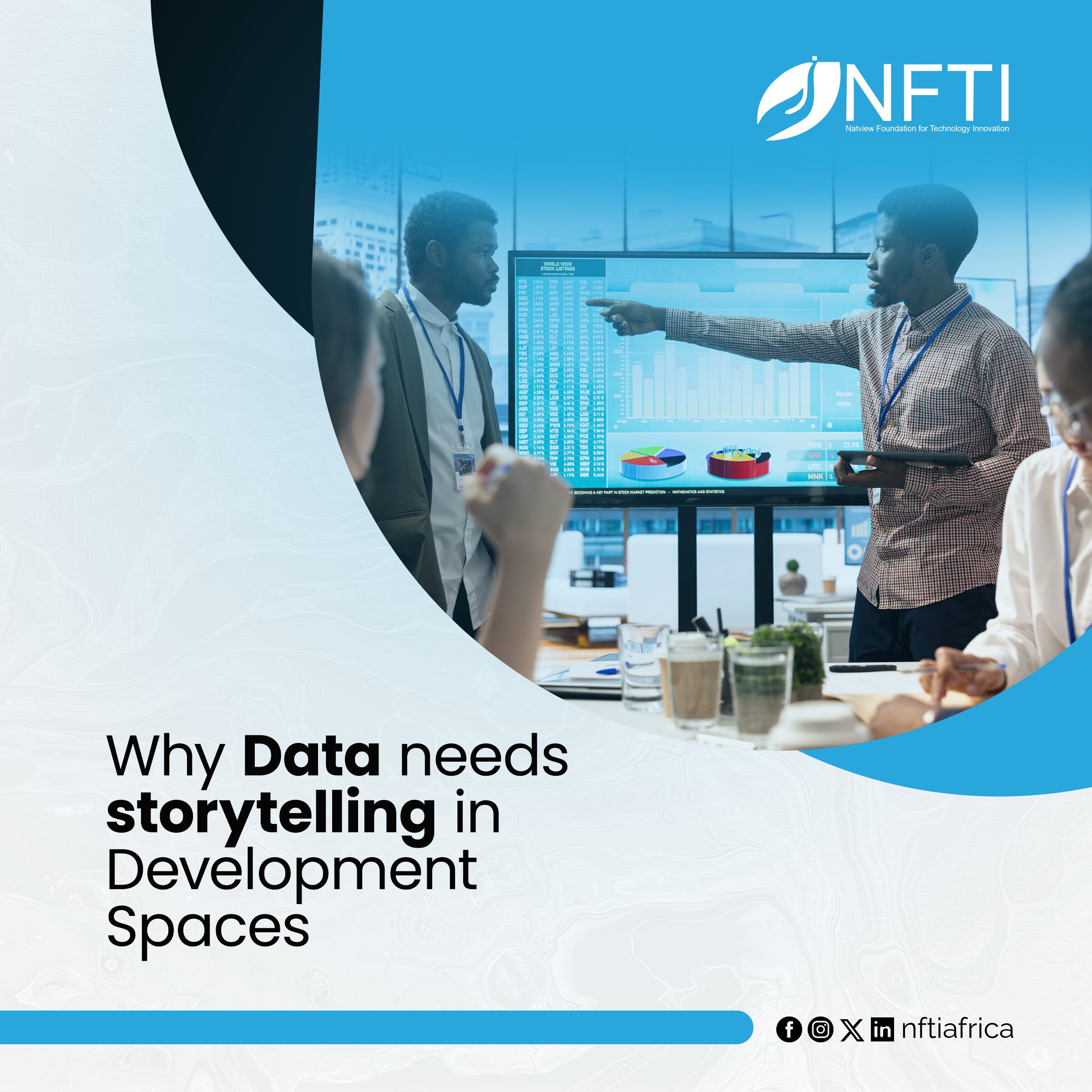
Data has become the backbone of development work, a quiet force shaping the policies, programs, and decisions that determine the well-being of communities. Yet, even in its immense value, data has a limitation: it cannot speak for itself. It does not possess a voice, an emotion, or a narrative. This is why storytelling is indispensable in development. It transforms numbers into meaning, converts patterns into insight, and turns what may appear like simple records into a compelling call for action. Development institutions across the world invest heavily in gathering information from routine health data to longitudinal studies, facility assessments, and monitoring frameworks. These investments only achieve their full potential when the findings are translated into stories that resonate not only with analysts, but with the men and women in government offices who must make decisions that influence millions of lives.
When storytelling enters the world of data, the numbers begin to breathe. Figures that once floated on spreadsheets suddenly reveal the circumstances and realities behind them. A data point on maternal health, for example, has far greater impact when paired with the lived experience of a woman navigating the challenges of antenatal care in a rural community. Without that context, the statistic remains distant; with it, the number becomes a human truth. This transformation is essential, because development is not only about reporting metrics, it is about revealing the lived conditions of people and ensuring that interventions respond to those realities. Storytelling gives depth to the work, allowing policymakers to understand not just what is happening, but why it matters.
This becomes even more important when considering longitudinal studies. These studies map change over time, showing whether communities are advancing, stagnating, or sliding backward. But their true significance lies not merely in displaying trends; it lies in uncovering the forces shaping those trends. At NFTI, the longitudinal study on Primary Health Care (PHC) readiness offered a clear demonstration of this. By closely tracking indicators across supply chain management (SCM) and human resources for health (HRH), the study did more than measure readiness it revealed the underlying story of how facilities evolve, adapt, and struggle.
What the data showed on the surface was movement: shifts in stock availability, changes in reporting timeliness, fluctuations in staffing levels, and patterns in facility capacity. But the deeper narrative was far more instructive. When essential commodities were consistently available, the numbers pointed not only to improved logistics but to stronger coordination across the supply chain. When reporting quality increased, the story was often rooted in better staff training or the presence of newly deployed health workers. And in facilities where readiness declined, the data illuminated the real issues vacancies that were not filled, supply delays caused by bottlenecks, or periods where supervision and support systems weakened.
This is why the longitudinal study mattered. It connected the dots between what was happening inside PHCs and why those patterns emerged. It revealed, for instance, that some facilities improved their readiness not by chance, but because certain HRH interventions mentorship, supportive supervision, or newly assigned staff aligned with periods of increased supply chain stability. Likewise, facilities that struggled often did so because both HRH and SCM weaknesses appeared simultaneously, creating a compounded effect on service readiness. These insights would have been invisible without storytelling. The numbers alone would show fluctuations, but the narrative explained the human and systemic realities driving them.
A rise in antenatal attendance, for example, means little until it is connected to a readiness environment where midwives were available, commodities were on the shelves, and reporting systems functioned well enough to support early intervention. The study allowed NFTI to articulate these connections clearly. It transformed the dataset into a story of effort, system behavior, and the lived experience of the facilities themselves showing not only that change occurred, but what decisions or failures produced those changes. This is the heart of longitudinal insight: trends become more than curves on a graph; they become explanations that guide action.
The ability to connect data to lived experience is what transforms complex information into something relatable. Development data is often dense, technical, and overwhelming for stakeholders who do not work in analytics. A policymaker may see rows of figures but fail to understand the implications without interpretation. Storytelling becomes the thread that binds the technical to the human. It makes the data accessible by pulling out the essence: the challenge, the impact, the opportunity, the need. When stakeholders understand the narrative behind the numbers, they begin to engage. They ask questions. They seek solutions. They become active participants in evidence based decision-making rather than passive receivers of reports. In this way, storytelling is not an optional embellishment; it is a catalyst for effective governance.
It is also important to recognize that data processing alone is insufficient. Thousands of records can be cleaned, sorted, and analyzed, yet still fail to ignite action if their meaning is not brought to life. The value of data lies not simply in its existence, but in the insight it produces. Development systems are full of datasets that never leave their silos, reports that sit untouched, dashboards that remain unseen, and indicators that never become triggers for policy. This is the silent tragedy of development work. Storytelling combats this by giving data a pulse. It illuminates the challenges embedded within the records, highlights the people behind the indicators, and draws out the issues that require urgent attention. It pushes data from being static to being strategic, something that can compel decisions, shape budgets, and inform reforms.
A clear example of the power of data storytelling can be seen in the Health Facility Assessment (HEFA) platform. HEFA stands as Kaduna State’s one-stop shop for health facility information, a central point where data is triangulated from multiple sources to paint a complete picture of the health system. Through HEFA, vast amounts of DHIS2 data flow into an integrated pipeline: stillbirths, antenatal attendance, measles vaccinations, malaria cases, fever episodes, dental visits across stages, outpatient attendance, and more. On their own, these datasets offer fragments of the truth. Together when triangulated and contextualized they reveal powerful insights about access, performance, quality, and outcomes. But even here, the most important question remains: what story is the HEFA data telling?
If the numbers show an increase in outpatient cases, the story may be about facility capacity being overstretched or communities relying on public health centers more due to economic hardship. If antenatal attendance rises, perhaps the story is one of trust women returning to facilities because services have become more reliable. If stillbirths decline, the story may highlight improved skilled birth attendance or better maternal surveillance. In each case, the data directs our attention, but the story reveals the meaning. It guides policymakers toward the right interventions. It helps government officials understand where to invest, where to reform, and where to strengthen the system. HEFA’s value is not only in the accuracy of its data, but in its ability to tell a story compelling enough to influence the decisions that will determine the health outcomes of Kaduna State.
This is why storytelling must be recognized as a foundational element in development work. It carries evidence beyond the desks of analysts and into the rooms where decisions are made. It ensures that the investments poured into data systems translate into public good. It strengthens accountability by ensuring that insights do not remain hidden. It builds trust between institutions and the communities they serve by showing that data is not collected for storage, but for transformation. Above all, it reminds us that development is a human endeavor one that requires clarity, empathy, and intentional communication.
Data without storytelling is information without influence. But when the two come together, they form a language powerful enough to move governments, engage communities, and drive progress. This is the true essence of data storytelling in development: it enables data to speak to the mind and also to the conscience, compelling action where it is needed most.