Across sectors and geographies, there is a persistent disconnect between evidence and impact, and it remains one of the central challenges facing development today. A recent global convening of policymakers, funders, researchers, and practitioners at Wilton Park made this reality explicit. Despite the abundance of data, evaluations, and research, the application of evidence in development decision-making remains surprisingly limited. As one participant put it, “While there is a growing mountain of evidence, there is also less attention for evidence than ever before.”
The Wilton Park report on Evidence-Led and Impact-Driven Development argues that the absence of strong systems prevents consistent absorption, interpretation, and application of evidence over time. The Wilton Park report highlights several reasons why evidence struggles to influence policy. These reasons include fragmented data ecosystems, weak institutional capacity, politicized decision-making, and a lack of trust between evidence producers and users. Institutions with limited resources and a perception of evidence as external rather than as their own intensify these challenges.
What this means in practice is that evidence exists outside the machinery of governance. It is selectively consulted, inconsistently applied, and rarely embedded into routine planning, budgeting, and review processes. This combination creates a kind of development that is both active and unstable.
The missing element is system strengthening.
True system strengthening is about embedding evidence in how institutions function. It is about building public servants’ capacity to ask the right questions of data, creating incentives for evidence use, and designing processes that make learning routine rather than exceptional.
This has been the focus of NFTI’s work since 2018, starting with the Data Lab project.
Across health, governance, digital transformation, and workforce development, NFTI has consistently held that evidence matters only if it changes decisions, and decisions improve only when the systems that support them are strong. While many organizations deliver tools and reports, NFTI embeds capability, ownership, and decision logic directly within government institutions so systems continue to work long after external support has withdrawn. Simply put, our distinction lies in our ability to translate evidence into institutional routines.
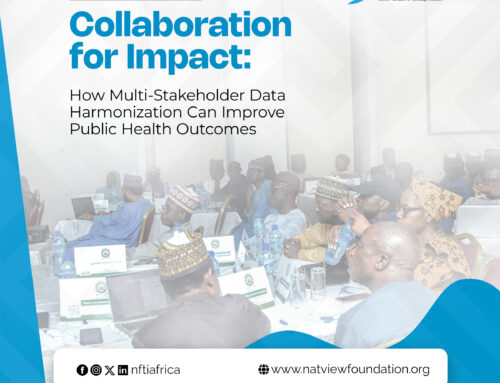
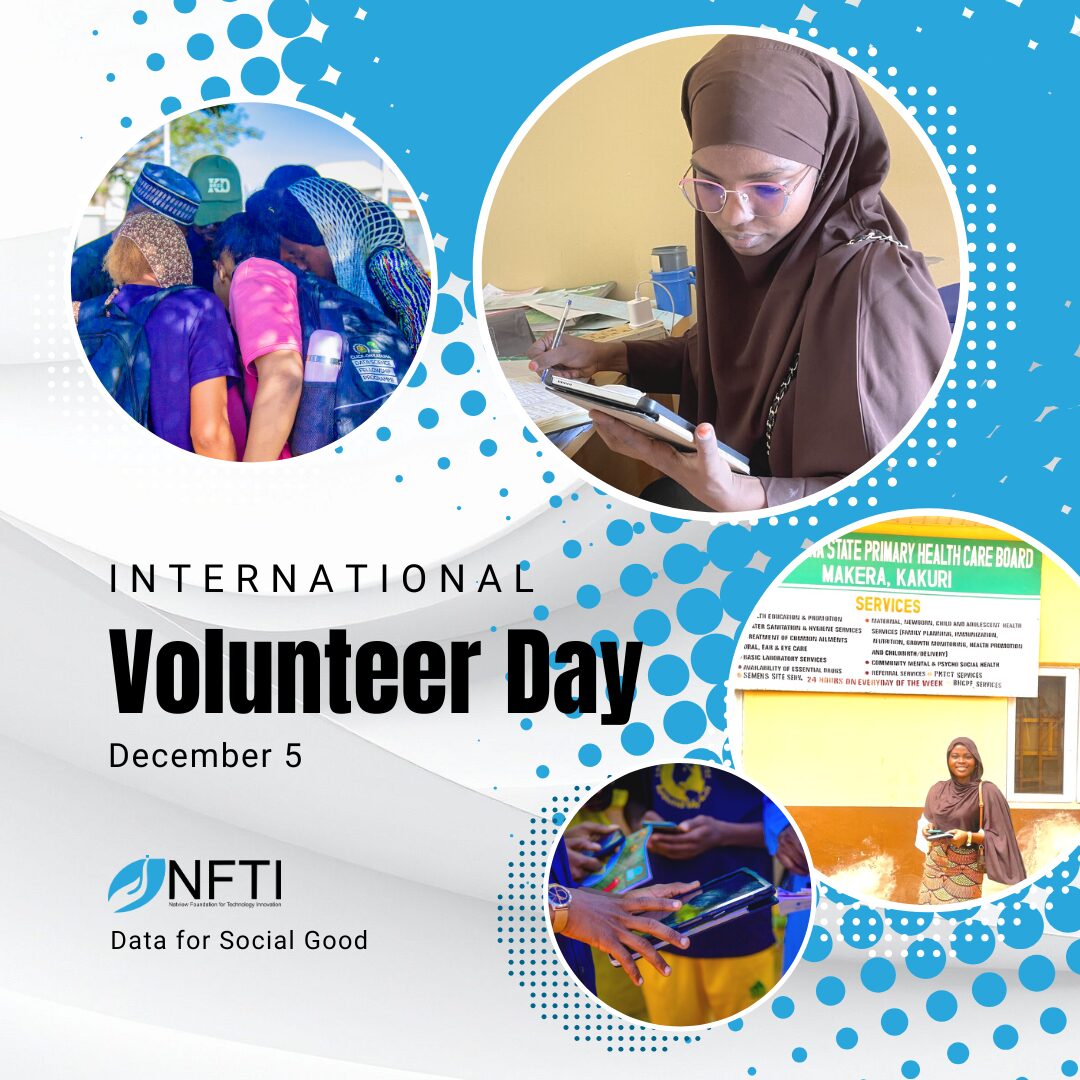
Nowhere is this clearer than in NFTI’s partnership with the Kaduna State Bureau of Statistics and the Kaduna State Ministry of Health and its agencies. Over the last couple of years, Kaduna State has emerged as an exemplar in digital health and data transformation. Through the Gates Foundation grant, NFTI supported the state government in connecting multiple data streams across critical domains, including human resources for health, supply chain management, healthcare financing, and client experience. This integration has created line-of-sight visibility from policy to facility, enabling decisions that were previously impossible.
True system strengthening is about embedding evidence in how institutions function.
Specifically, over the last year, operational data systems have been strengthened to generate real evidence on health facility readiness. The digitization of the Human Resources for Health Management Information System produced, for the first time, an accurate and trusted count of the health workforce. This system was then used to forecast workforce needs from 2025 to 2030 and to design a replacement plan for 1,800 health workers. Previously, the absence of an integrated and institutionalized Human Resources for Health Management Information System meant that workforce planning relied on fragmented records, manual headcounts, and assumptions that could not be systematically verified. Data existed in pockets, but there were no clear routines, ownership structures, or decision pathways linking workforce information to planning and budgeting processes. Through a deliberate systems-strengthening approach, the HRHMIS was digitized and embedded within existing government workflows. Clear governance arrangements, standardized processes, and institutional responsibilities were defined to ensure data quality, routine updates, and sustained use. As a result, policymakers now have access to a comprehensive and trusted workforce dataset that is actively used for decision-making.
A biometric attendance pilot across all 23 local government areas’ primary healthcare centers of excellence introduced a new level of accountability into workforce planning. Instead of assumptions, the state could now see presenteeism rates, cadre distribution, and facility-level staffing gaps.
In supply chain management, NFTI has supported the state to integrate multiple manual and semi-structured data sources into a single dashboard spanning requisition, warehousing, last-mile delivery, and consumption. This provided visibility on stock levels, lead times, facility coverage, expiry-related wastage, and the real financial value of commodities in the system. Today, state actors can proactively redistribute stock, prevent prolonged stockouts, and identify inefficiencies before they become crises.
Crucially, these platforms were designed to answer strategic questions the state was already asking. How ready are our facilities to deliver services? Where are workforce gaps emerging? Which facilities are overstocked while others are empty? What is the true cost of inefficiency?
Beyond technology, NFTI’s system strengthening heavily involves building institutional memory and driving sustainability. Comprehensive standard operating procedures have been developed and embedded within the Kaduna State Bureau of Statistics, transforming it beyond a data producer into a learning organization. These SOPs standardized processes, improved efficiency, strengthened compliance, and created a foundation for training, accountability, and continuous improvement. Talk about knowledge management becoming institutional!
This is what systems strengthening looks like when it is taken seriously. It is detailed and deeply contextual, but it delivers cumulative gains.
For governments, this approach delivers durability. For partners and funders, it delivers value for money. For communities, especially rural ones, it delivers consistency and impact by ensuring that qualified health workers show up, that medicines are available, and that facilities are fully functional.
As the 2030 SDG deadline draws nearer, the real test will be which institutions and partners can help governments govern, learn, and decide better at scale.
NFTI is already showing that systems can be strengthened in complex environments, that evidence can be made useful, and that institutions can be supported in managing their data instead of outsourcing it.
If you take the time to read the Wilton Park report, you will see that it places strong emphasis on locally-led development, arguing that evidence is most effective when produced, interpreted, and applied by those closest to the context. NFTI’s work reflects this principle by prioritizing institutional ownership, co-design, and long-term capacity-building over extractive delivery models. We have demonstrated over time that when systems are deliberately and locally strengthened, evidence can finally do what it was always meant to do. That is improving lives, sustainably and at scale.
The lesson from Wilton Park is unambiguous. Evidence does not fail because it is weak. It fails because systems are.
If you enjoyed this read, please share your perspectives on the immediate, low-hanging system reforms Nigeria can pursue to accelerate progress toward the SDGs by 2030.