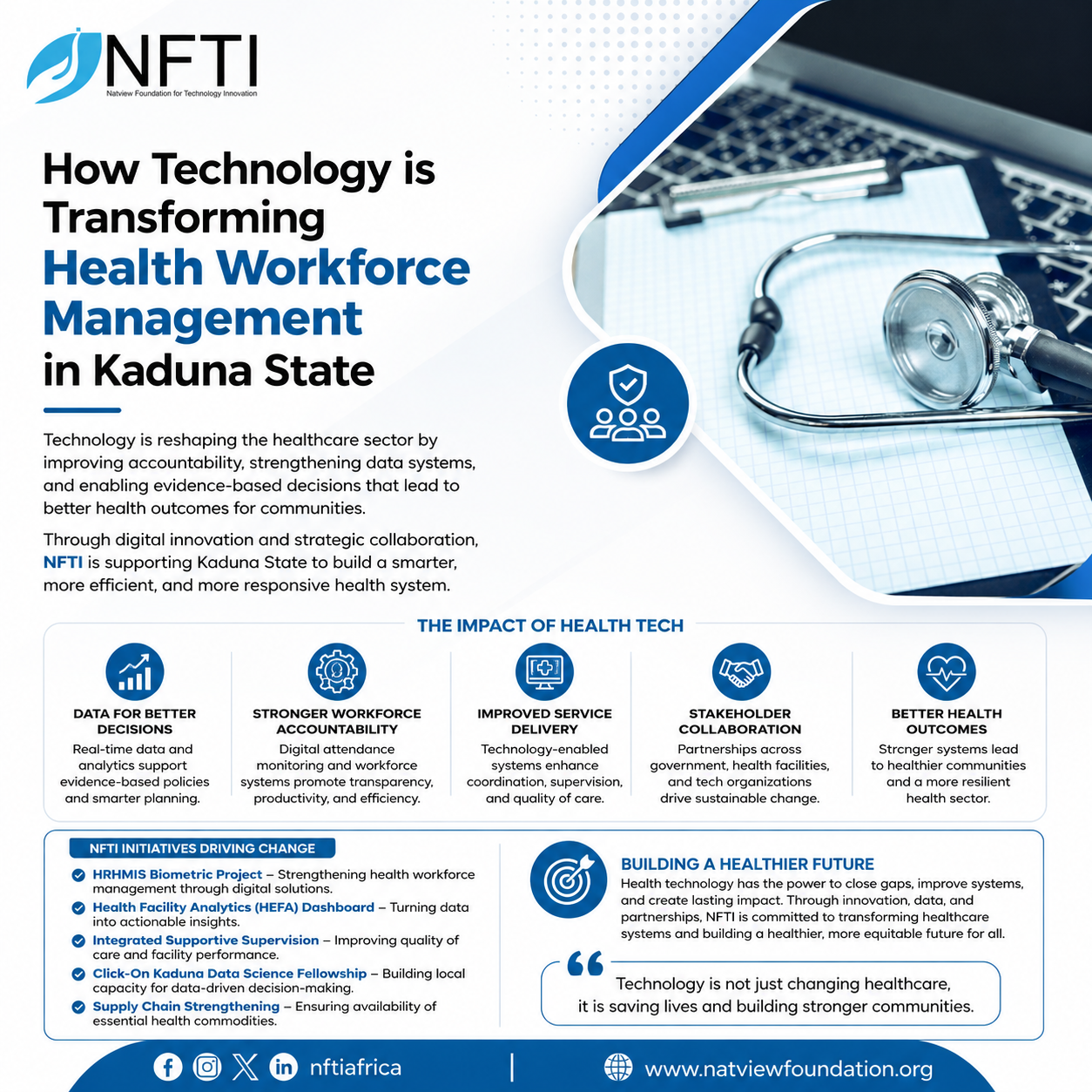
Technology is transforming healthcare systems across the world, improving healthcare outcomes, strengthening accountability, enabling evidence-based decision-making, and enhancing the experiences of both patients and healthcare workers. Across Africa, digital innovation is increasingly becoming a necessary tool for addressing long-standing health sector challenges, from workforce shortages and inefficient systems to weak health data management and limited access to quality healthcare services.
The COVID-19 pandemic further accelerated this transformation globally, forcing healthcare institutions and governments to rethink traditional systems and embrace technology-driven solutions that could improve coordination, monitoring, and service delivery. In many ways, the pandemic highlighted the urgent need for resilient and data-driven healthcare systems capable of responding effectively to public health challenges.
In Nigeria, one of the most critical areas where technology is beginning to reshape healthcare is in workforce management. Healthcare systems depend heavily on human resources, yet workforce monitoring, attendance tracking, personnel accountability, and access to reliable staff data remain major challenges across many public health institutions. Without accurate workforce information, healthcare planning becomes difficult, resource allocation weakens, and service delivery suffers.
Recognizing these gaps, the Kaduna State Primary Health Care Board (SPHCB), with technical support from the Natview Foundation for Technology Innovation (NFTI), embarked on the Human Resource for Health Management Information System (HRHMIS) Biometric Project, a strategic initiative designed to strengthen workforce accountability and improve health systems management across Primary Health Care Centres (PHCs) in Kaduna State.
The HRHMIS Biometric Project represents more than just the deployment of technology. It reflects a broader commitment to building a more transparent, efficient, and evidence-driven healthcare system capable of supporting better healthcare outcomes for communities.
Implemented across 23 selected Primary Health Centres designated as Centers of Excellence, the initiative introduced biometric systems to support real-time staff attendance monitoring, workforce verification, and digital personnel management. Through the integration of biometric technology into the healthcare system, the project seeks to improve operational efficiency while generating accurate workforce data that can support planning, policy development, and decision-making within the health sector.
The project also aligns with the growing recognition that health information systems are critical to strengthening healthcare governance. Health tech solutions such as Human Resource for Health Management Information Systems allow governments and institutions to collect, manage, and interpret workforce data more effectively. These systems not only improve transparency but also provide healthcare leaders with actionable insights that can guide policy and operational decisions.
For Kaduna State, the biometric implementation became an important step toward modernizing workforce management within the primary healthcare system.
Before implementation began, extensive planning and stakeholder engagement sessions were conducted involving the Kaduna State Ministry of Health, the Head of Service, labour unions, and technical stakeholders. These engagements ensured that the project remained collaborative, inclusive, and aligned with the broader goals of strengthening healthcare delivery within the state.
Comprehensive facility assessments were also carried out across the participating PHCs to evaluate operational readiness and identify areas requiring technical support before deployment. These assessments helped shape implementation strategies and highlighted the importance of adapting digital health interventions to local realities.
A key component of the project was the deployment of 23 Local Technical Assistants (LTAs), who played a central role in supporting the operationalization of the biometric systems within the facilities. The LTAs were responsible for assisting with installation, enrollment, troubleshooting, and routine management of the devices across the PHCs.
To prepare them for the assignment, the LTAs underwent orientation and hands-on technical training sessions focused on enrollment procedures, device handling, maintenance protocols, and operational troubleshooting. Their role became critical in bridging the gap between technology and the day-to-day realities of healthcare facilities.
Over the course of implementation, the LTAs worked closely with healthcare workers and facility teams to ensure smooth adoption of the biometric systems while also documenting implementation experiences, operational realities, and lessons from the field.
Their work officially concluded in January following the successful completion of the pilot implementation phase.
Like many digital transformation initiatives, the HRHMIS Biometric Project also presented important learning opportunities. During the implementation process, stakeholders encountered operational and technical challenges that reinforced the importance of continuous engagement, capacity strengthening, and institutional support in sustaining digital health interventions.
One of the major lessons from the project was the understanding that technology alone cannot transform healthcare systems. Sustainable transformation requires collaboration among governments, healthcare providers, technical partners, and frontline workers. It also requires investment in local capacity and institutional ownership.
This collaborative approach remains one of the strongest aspects of the HRHMIS initiative. Throughout the project lifecycle, stakeholders remained actively involved in planning, deployment, implementation, and evaluation processes. This level of engagement helped build trust, improve adoption, and strengthen long-term sustainability.
The project eventually reached a significant milestone with the formal handover of the HRHMIS biometric systems and operational responsibilities to the Kaduna State Government through the SPHCB.
The handover event served as both a reflection point and a transition phase. During the session, NFTI and SPHCB jointly presented the complete implementation journey, highlighting the planning processes, stakeholder engagements, facility assessments, deployment strategies, implementation outcomes, challenges encountered, and lessons learned throughout the project lifecycle.
Participants also shared feedback and reactions regarding the impact of the initiative on accountability, workforce monitoring, and healthcare management within the participating facilities.
The handover itself represents a critical step toward sustainability. Beyond transferring devices and operational responsibilities, it reinforces state ownership and demonstrates the importance of building systems that can continue functioning effectively beyond the lifespan of implementation projects.
As part of the transition process, the project will proceed into a five-day handholding phase where the LTAs will continue providing technical guidance and operational support to the state team to ensure smooth continuity and strengthen local capacity for long-term management of the system.
The HRHMIS Biometric Project also reflects broader trends in health technology transformation across Africa, where digital systems are increasingly being used to strengthen healthcare delivery, improve governance, and support evidence-based public health decision-making.
Organizations like NFTI continue to play an important role in supporting these transformations by facilitating collaboration among stakeholders, strengthening digital capabilities, and supporting innovative technology-driven solutions that address public health challenges.
NFTI’s work across digital health systems, healthcare analytics, workforce management, supportive supervision systems, supply chain strengthening, and data science capacity building demonstrates the growing potential of health technology to improve healthcare systems and public sector performance in Nigeria and beyond.
As technology continues to evolve, initiatives like the HRHMIS Biometric Project show how data systems and digital innovation can contribute to building healthcare systems that are more transparent, accountable, efficient, and responsive to the needs of communities.
The future of healthcare in Africa will increasingly depend on the ability of governments, institutions, and technology partners to work together in building systems that place data, accountability, and innovation at the center of healthcare delivery. Through initiatives like this, Kaduna State is taking important steps toward that future.