
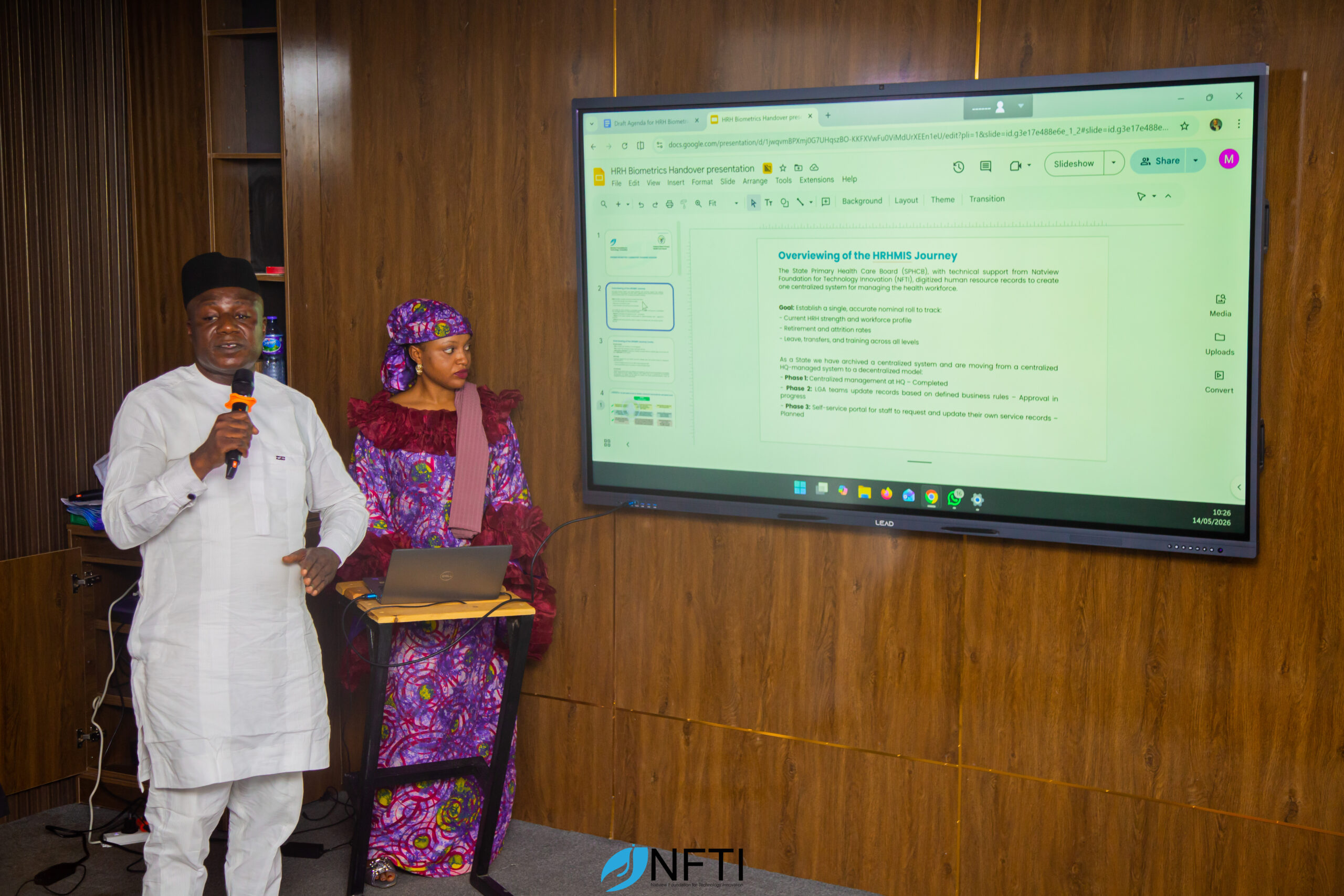
The Natview Foundation for Technology Innovation (NFTI), in collaboration with the Kaduna State Primary Health Care Board (SPHCB), has officially conducted the handover of the Human Resource for Health Management Information System (HRHMIS) Biometric Project to the Kaduna State Government, marking a major milestone in the state’s drive toward improved accountability and data-driven health workforce management.
The handover event followed the successful completion of the pilot implementation phase across 23 selected Primary Health Centres (PHCs) in Kaduna State, where Local Technical Assistants (LTAs) concluded their deployment and operational support activities in January. The initiative, implemented under the State’s Primary Health Care Memorandum of Understanding (MoU), introduced biometric technology into the health sector to strengthen attendance monitoring, workforce accountability, and service delivery at the PHC level.
During the handover session, the SPHCB and NFTI teams jointly presented the full HRHMIS biometric implementation journey, highlighting the extensive planning and stakeholder engagements that shaped the project from inception to execution. Presentations also covered facility assessments carried out across the selected PHCs, operational strategies adopted during deployment, key implementation challenges encountered in the field, and lessons learned throughout the pilot phase.
The session created an opportunity for open reflections and feedback from stakeholders, technical teams, and participants, who shared reactions and recommendations on the project’s impact and sustainability. Discussions emphasized the importance of digital workforce management systems in strengthening transparency within the health sector and improving evidence-based decision-making.
A major highlight of the event was the formal handover of the biometric systems and operational responsibility to the Kaduna State Government through the SPHCB, reinforcing state ownership and long-term sustainability of the initiative.
As part of the next phase, the project will proceed into a five-day handholding and transition support period, during which the LTAs will continue to provide technical guidance and operational support to ensure a smooth transition, strengthen local capacity, and support the effective use of the HRHMIS biometric system across the facilities.
The HRHMIS Biometric Project is expected to continue supporting improved workforce monitoring, operational efficiency, and accountability across primary healthcare facilities in Kaduna State while serving as a model for future scale-up initiatives within the health sector.
