
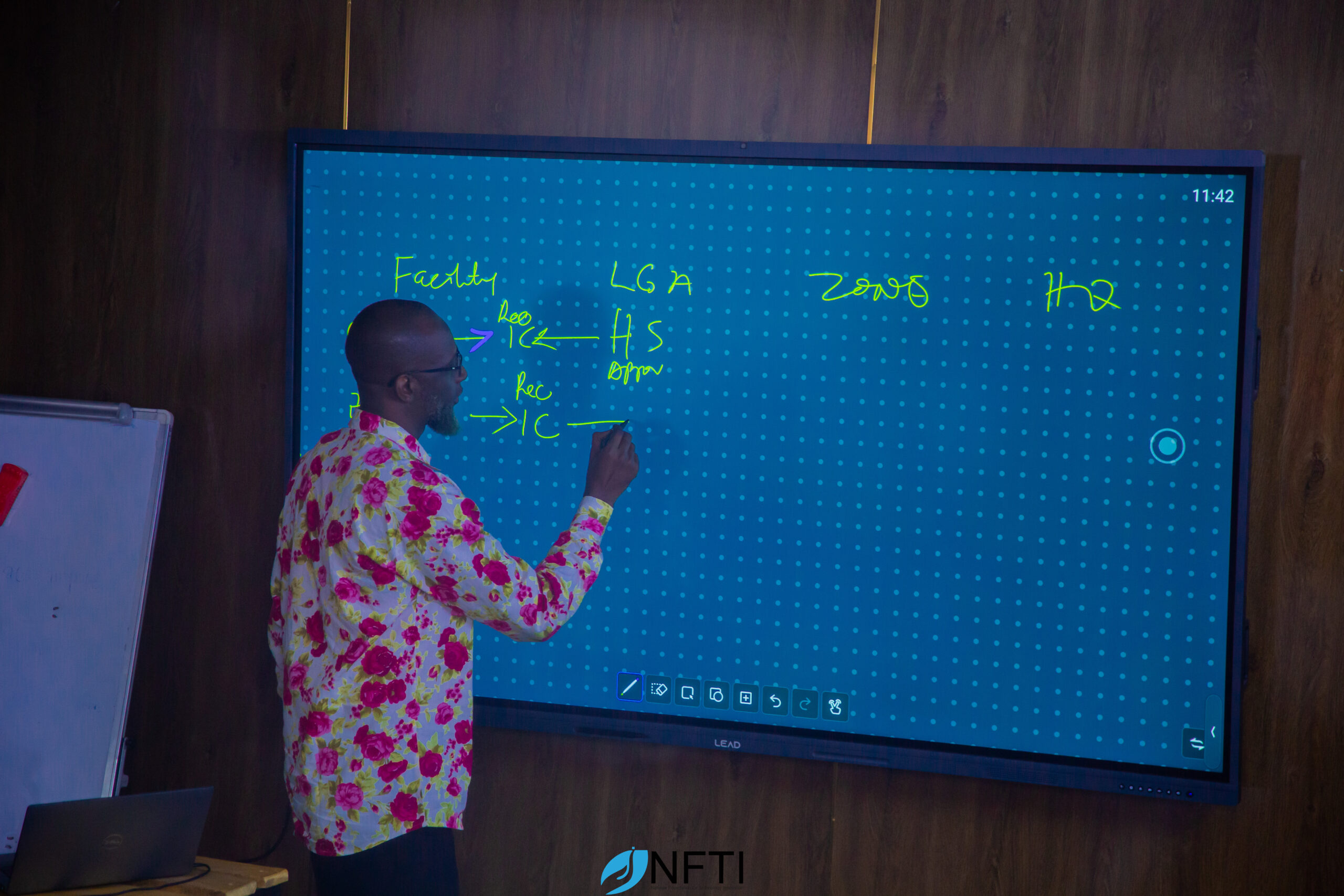
The Kaduna State Primary Health Care Board (SPHCB), with technical support from the Natview Foundation for Technology Innovation (NFTI), hosted a two-day Human Resource for Health Management Information System (HRHMIS) Decentralization and Business Process Update Meeting, bringing together key stakeholders to strengthen health workforce management and shape the next phase of the system’s expansion across the state.
The engagement brought together the Director of Human Resources, senior officials from the Primary Health Care Board, technical teams, and NFTI to review existing human resource workflows and document business processes that will guide the redesign of the HRHMIS as it transitions from a centralized to a decentralized platform.

The meeting focused on four core HRHMIS modules that support workforce management within the Primary Health Care Board: Transfer Management, Leave Management, Records Management, and Talent Management. These modules form the backbone of the Board’s human resource processes and are central to ensuring that health workers are effectively managed throughout their careers.
As the HRHMIS expands to accommodate users beyond the state headquarters, the meeting examined how existing processes currently operate across Local Government Areas (LGAs), zonal offices, and the state level. Participants mapped each workflow in detail to ensure the digital system accurately reflects operational realities and supports efficient service delivery.
Discussions explored the end-to-end process for staff transfers and postings, examining how transfer requests are initiated, reviewed, approved, and implemented across the different levels of the health system. Participants also reviewed the Board’s leave management processes, documenting procedures for annual leave, sick leave, casual leave, maternity leave, and leave of absence to ensure each workflow is properly represented within the system.
The engagement also sought to define the roles and system privileges that will be assigned to users at the LGA and zonal levels. By decentralizing these functions, designated officers will be able to initiate and manage routine human resource processes within their respective jurisdictions, reducing the administrative burden currently placed on the state headquarters while improving efficiency and response time.
Rather than routing every request through a central office, the redesigned HRHMIS will enable responsibilities to be distributed appropriately across different levels of the health system. This approach is expected to streamline human resource management, strengthen accountability, and improve the timeliness of workforce administration.
The documentation exercise will serve as a blueprint for configuring the next phase of the HRHMIS, ensuring that the platform aligns with established business processes while accommodating the operational needs of new users across the state.
The business process update meeting represents another important milestone in Kaduna State’s ongoing digital transformation of health workforce management. By aligning technology with existing administrative processes and empowering users at every level of the health system, the HRHMIS continues to evolve into a comprehensive platform that supports evidence-based workforce management, institutional efficiency, and sustainable health system strengthening.
A key long-term objective of the decentralization effort is the introduction of self-service functionality within the HRHMIS. The planned self-service features will allow health workers to access selected human resource services directly through the platform, reducing manual processes, improving transparency, and increasing operational efficiency across the workforce.
Through its partnership with the Kaduna State Primary Health Care Board, NFTI remains committed to supporting the development of digital health solutions that improve governance, strengthen public institutions, and enhance healthcare delivery through technology and data-driven innovation.
