
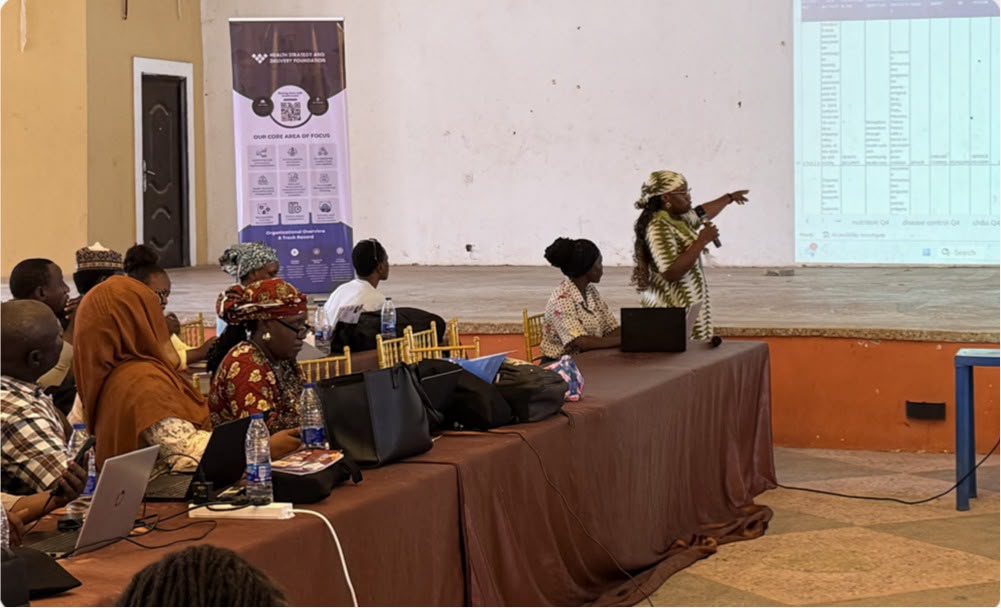
The Natview Foundation for Technology Innovation (NFTI) joined government stakeholders, development partners, and health programme officers at the Kaduna Annual Operational Planning (AOP) System Training, held from 6–8 July 2026, to strengthen the use of digital tools for planning, monitoring, reporting, and performance management across Kaduna State’s health sector.
The three-day engagement brought together representatives from the Kaduna State Ministry of Health, the Department of Planning, Research and Statistics (DPRS), monitoring and evaluation officers, programme managers, and implementing partners. The training focused on building participants’ capacity to effectively use the Kaduna Operational Planning System (KOPS), a digital platform developed to improve the management and tracking of Annual Operational Plans.
The training began with an overview of the Annual Operational Planning Tracking Project, highlighting the need to move away from fragmented manual reporting systems towards a centralized digital platform that enables real-time activity tracking, improved accountability, and evidence-based decision-making.
Participants were introduced to the core features of the Kaduna Operational Planning System, including system navigation, user roles, activity management, and reporting functions. Through live demonstrations and practical exercises, they learned how to upload Annual Operational Plan activities, update implementation progress, revise timelines, and maintain accurate project records within the platform.
The second day focused on data visualization and reporting. Participants explored the platform’s dashboards, learning how to interpret programme performance indicators and use available data to support management decisions. Sessions also covered Power BI integration, where facilitators demonstrated data refresh processes, synchronization procedures, and common troubleshooting techniques to ensure reports remain current and reliable.
Recognizing that quality data is essential for effective planning, the training also emphasized data validation and quality assurance processes. Participants reviewed uploaded information, identified inconsistencies, and discussed approaches for improving data completeness and accuracy before generating reports.
Attention then shifted to programme performance review through the Joint Annual Review (JAR) process. Working groups reviewed existing reporting templates, validated indicators, and updated the 2026 JAR template using available programme data to support upcoming performance assessments.
On the final day, participants presented their reviewed JAR templates, validated Annual Operational Plan datasets covering 2025 and the first quarter of 2026, and assessed Quarter Two implementation performance. The collaborative sessions also provided an opportunity to agree on practical next steps for strengthening routine monitoring, reporting, and evidence-based programme management across the state’s health sector.
The training strengthened participants’ capacity to utilize the Kaduna Operational Planning System for routine planning and monitoring, improved understanding of dashboard analytics and Power BI reporting, enhanced data quality practices, and fostered stronger collaboration among government institutions and development partners.
NFTI remains committed to supporting the adoption of digital systems that strengthen health governance, improve data quality, and enable informed decision-making for better health outcomes across Kaduna State.
