
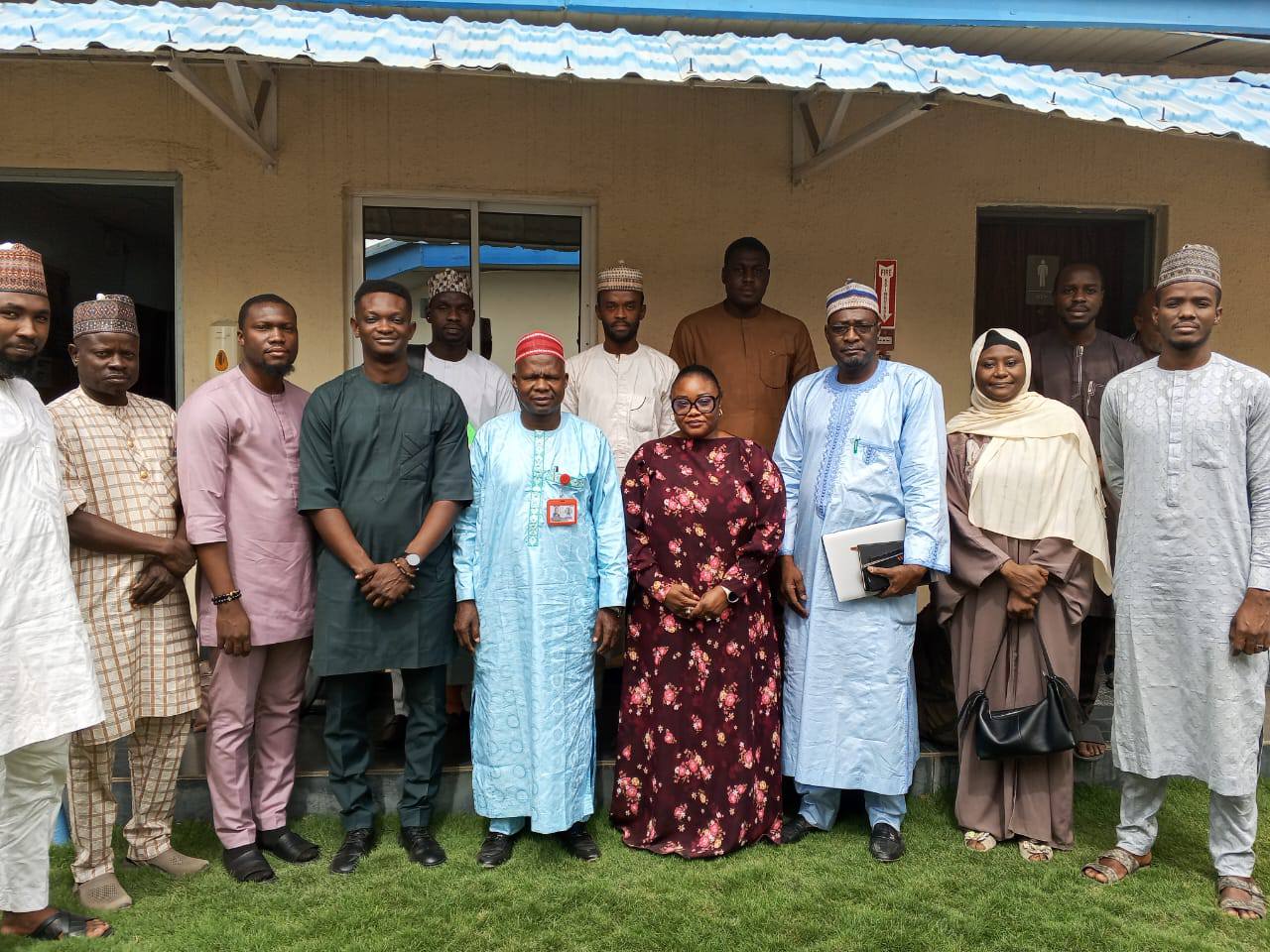
Natview Foundation for Innovation and Technology (NFTI), in partnership with Pathfinder International and Data Science Nigeria under the GEO-ST4R Consortium, is strengthening its partnership with the Kano State Primary Health Care Management Board (KNSPHCMB), to advance data-driven planning and service delivery across the state’s primary health care system.
The Consortium paid an advocacy visit to the Director General of KNSPHCMB, Professor Salisu Ahmed Ibrahim, at the Emergency Operations Centre (EOC) in Kano. The delegation, led by Dr. Olufemi Ibitoye, Technical Advisor at Pathfinder International, focused on strengthening the use of digitized microplanning and geospatial intelligence to improve reproductive, maternal, newborn, child, nutrition, and adolescent health outcomes.
Discussions during the engagement centred on deepening the adoption of the digitized microplan and the GEO-ST4R products platform to support evidence-based decision-making. Key areas of focus included collaboration on developing the 2026 microplan and the dissemination of GEO-ST4R insights and tools to other development partners working in the health sector in Kano State.
The Consortium also briefed the Director General on an upcoming capacity-building initiative to strengthen institutional capacity within KNSPHCMB. The planned activities include specialized training for the Board’s IT team, Monitoring and Evaluation officers, and Routine Immunization Officers across 15 zero-dose Local Government Areas. The training is designed to enhance the effective use of digital tools and data for planning, implementation, and performance monitoring.
For NFTI, the engagement reflects its ongoing commitment to applying data science, digital innovation, and geospatial intelligence to strengthen primary health care systems and support frontline decision-making. Working closely with government institutions and partners, NFTI continues to support efforts to ensure that health planning is grounded in accurate, timely, and locally relevant data.
The visit reaffirmed the shared commitment of KNSPHCMB and its partners to leveraging digitized microplanning as a critical enabler for expanding immunization coverage, reducing zero-dose populations, and improving equitable access to essential primary health care services across Kano State.
At its simplest, microplanning in RMNCH is about making sure real people are not missed. It helps health workers understand which women are pregnant, where newborns and young children live, which adolescents need services, and how far families must travel to reach care. Planning at the community level, rather than relying on rough estimates, enables health teams to determine when to visit a village, which services to provide, and how to use limited resources effectively. The result is more timely care, fewer missed appointments, and health services that feel closer, more reliable, and more responsive to the everyday realities of families.
