
NFTI Expands Longitudinal Study 2.0 to Kubau LGA with Three-Day Scale-Up Training
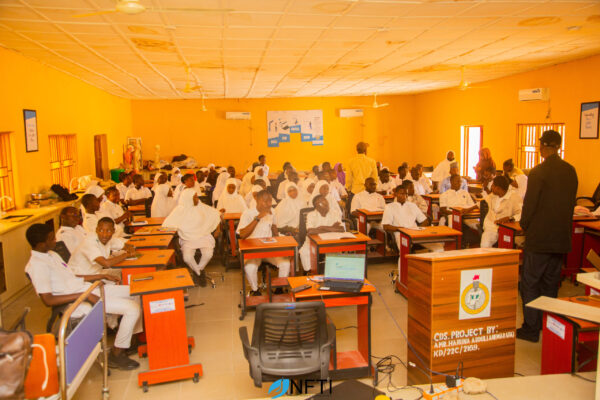
Natview Foundation for Technology Innovation (NFTI) has expanded the implementation of the Longitudinal Study (LS) 2.0 to Kubau Local Government Area with a three-day scale-up training held from 25th–27th February 2026 at the Kaduna State College of Nursing and Midwifery, Pambegua Campus.
The training represents a strategic step in broadening the reach of LS 2.0, reinforcing NFTI’s commitment to strengthening primary health care systems through structured, evidence-based assessments and data-driven planning.
The primary objective of the training was to onboard and equip selected students with the technical knowledge, practical skills, and operational understanding required for effective participation in LS 2.0 field activities within Kubau LGA. Participants were introduced to NFTI, its Data Management Community of Practice (CoP), and the scope and methodology of the Longitudinal Study, with emphasis on the role of quality data in strengthening health systems and improving service delivery outcomes.
The State team was in attendance, demonstrating institutional alignment and support for the expansion. Abubakar Muazu represented the Monitoring and Evaluation Officer of the Primary Health Care Board, Kubau LGA. The Deputy Provost of the College, Mall.Ahmed Ankuwa Abubakar, was also present, alongside all Heads of Department of the institution, underscoring the College’s commitment to supporting the initiative.
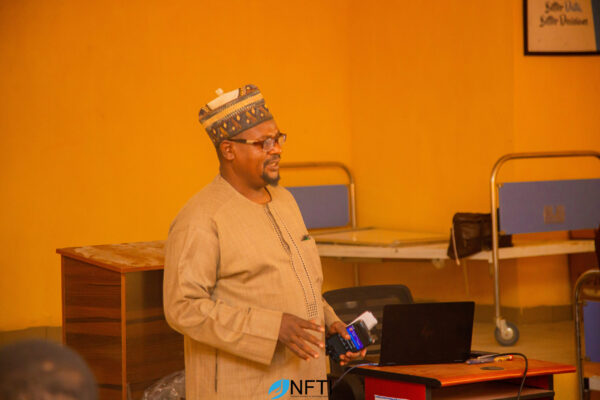
Mall. Ahmed Ankuwa Abubakar
Deputy Provost, Head of College of Nursing and Midwifery, Pambegua
Technical sessions focused on foundational data concepts, including the purpose of data collection, types and sources of data, dimensions of data quality, and governance principles. Interactive learning approaches were adopted, including structured discussions, multiple-choice exercises, and guided question-and-answer sessions to reinforce understanding.
A comprehensive practical session on ODK Collect was conducted, covering installation, configuration, QR code importation, navigation of the application, and real-time form submission. Pre- and post-assessments were administered to evaluate learning progression. Participants were also trained on data quality management, error detection, data security, confidentiality standards, field protocols, geofencing requirements, and situation room coordination processes.
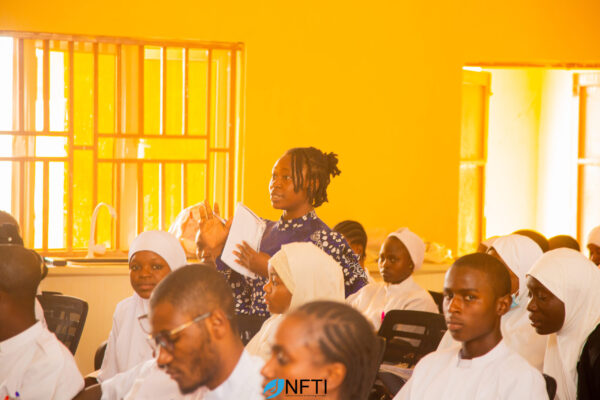
On the final day, the Baseline and Biweekly assessment tools were reviewed in detail, including Facility Background Information and Modules 1–3. Simulation exercises were conducted to replicate field scenarios and ensure mastery of the tools prior to deployment.
A total of 80 students participated in the training. Following performance evaluations and post-assessment outcomes, 60 participants were selected to serve as Data Champions for the implementation of Longitudinal Study 2.0 in Kubau LGA.
With the inclusion of Kubau LGA, LS 2.0 continues to scale its systematic facility-level assessment model, strengthening the foundation for credible, actionable data to support evidence-based decision-making across Kaduna State.
