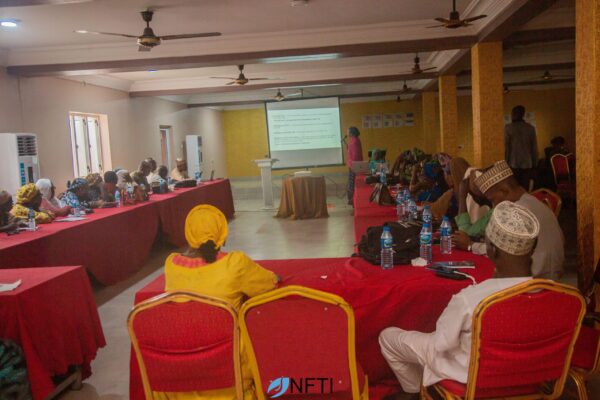

The Natview Foundation for Technology Innovation (NFTI) convened a one-day peer learning review and briefing session with health facility in-charges and key health officials from Kaduna South and Chikun Local Government Areas (LGAs), following 12 comprehensive rounds of visits under its ongoing longitudinal study. The session served as a platform for sharing findings, validating data, building capacity, and developing sustainable solutions to strengthen primary healthcare service delivery.
The meeting opened with remarks from the Health Secretary of Chikun LGA, who encouraged participants to remain attentive and actively contribute to the discussions.
Bashir Abdulraheem, representing the NFTI team, presented an update on the longitudinal study, highlighting key findings, challenges, and lessons learned across the 12 rounds of visits. His presentation emphasized the importance of reliable, consistent data for evidence-based decision-making and improved accountability within the healthcare system.
Salma Hedeja of NFTI facilitated the in-depth review of the longitudinal study scorecard, which provided insights into performance across human resources for health (HRH) and supply chain management (SCM). The session was highly interactive, as participants asked questions and shared practical experiences from their facilities. Notably, Pharm. Mansur, Head of Procurement at KADHSMA, attended the session and addressed questions on medicines and supply chain concerns, offering clarity on stock availability and procurement processes.
Pharm. Hasiya also led a hands-on workshop on calculating stock levels, equipping participants with practical tools to better manage inventories and prevent stockouts. Group brainstorming exercises followed, where health workers and local officials proposed actionable solutions to address HRH and SCM gaps while strengthening data systems for facility readiness.
Closing remarks were delivered by Pharm. Hasiya and the Senior Program Officer for Data Analytics at NFTI, who outlined the next steps in the longitudinal study. They encouraged participants to remain committed to accurate reporting, proactive problem-solving, and peer learning as a means of improving service delivery.