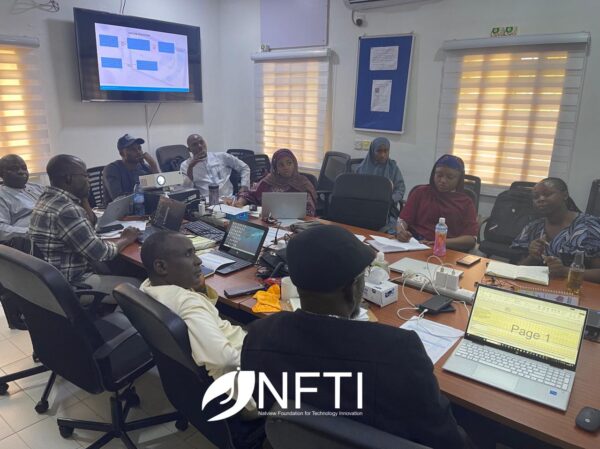
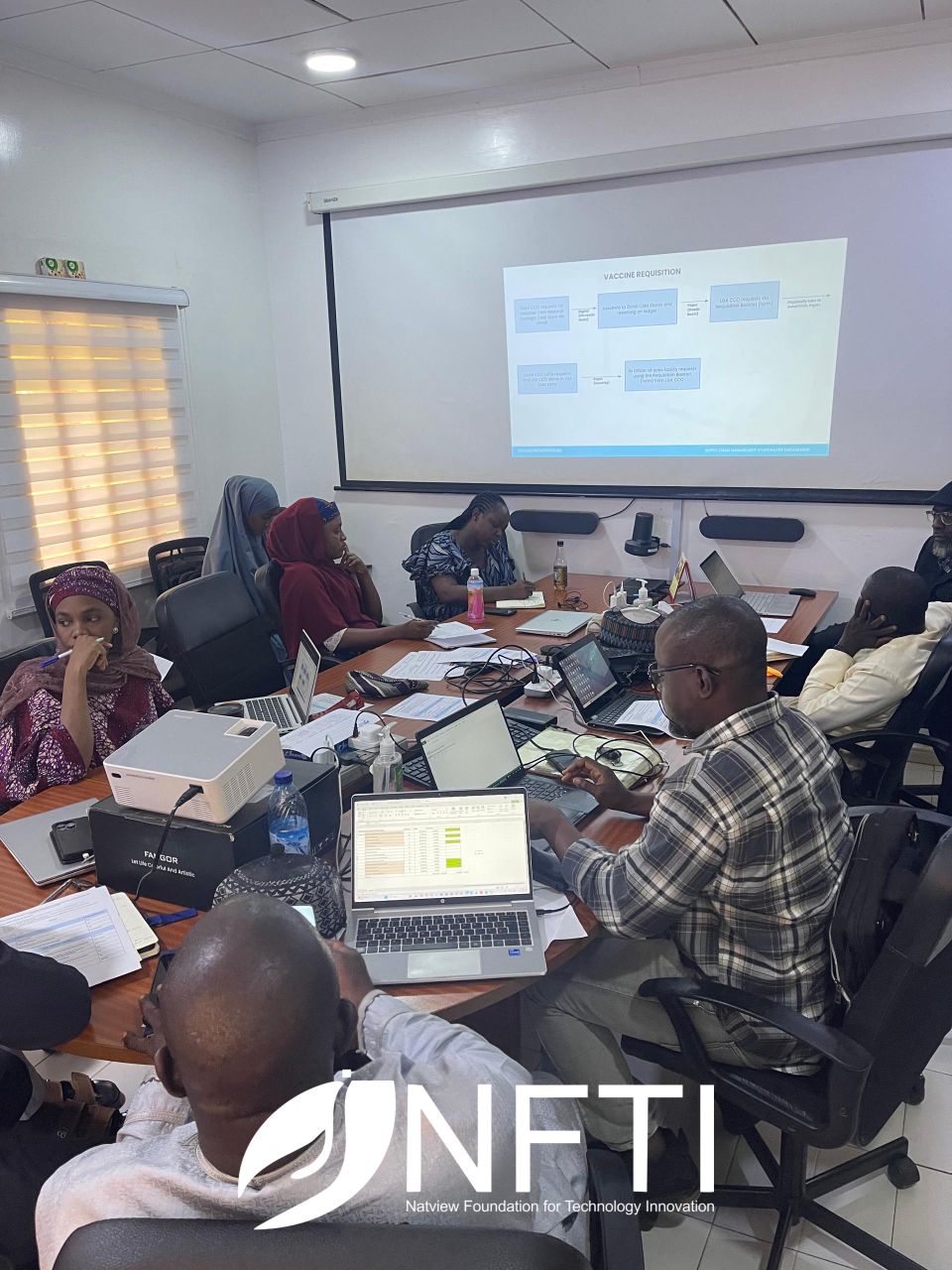
The Natview Foundation for Technology Innovation (NFTI) convened a comprehensive technical working session to review the zero draft of the Supply Chain Management (SCM) Dashboard for the vaccine component. The session brought together key representatives from the State Primary Health Care Board (SPHCB) and the National Primary Health Care Development Agency (NPHCDA), including the State Cold Chain Officer, Charles Hosea Yunana, and the State Immunization Officer, Ibrahim Adamu.
The meeting opened with remarks from the Incident Manager, Dr. Abdullahi Musa Garba, who underscored the importance of reviewing the dashboard’s indicators, structure, and intended purpose to strengthen operational efficiency across the vaccine supply chain. He emphasized that a functional, well-validated dashboard is essential for improving visibility, promoting accountability, and ensuring the timely delivery of vaccines across Kaduna State.
NFTI’s Senior Program Officer for Health Data Strategy and Systems Strengthening, Mr. Victor, delivered a goodwill message emphasizing the growing need for data-driven solutions within the state’s health sector. He highlighted the importance of ensuring that data is not only accurate but also visually accessible, enabling program teams to interpret insights quickly and act with confidence. He reaffirmed NFTI’s commitment to supporting Kaduna State in strengthening its digital health systems and expressed appreciation for the state’s sustained partnership
A recap of the SCM dashboard’s vision and objectives was presented by Salma Hadeja, who noted the significant volume of vaccine-related data generated at facility and state levels. She explained that although this data exists, much of it remains paper-based, limiting its usefulness. Digitization, she emphasized, is critical to realizing the full purpose of the SCM dashboard and ensuring real-time, data-driven decision-making.
The deliberation segment prompted thoughtful contributions from participants, who offered observations, comments, and recommendations on the dashboard’s metrics, structure, and workflows. Feedback centered on refining indicators, improving clarity, resolving operational challenges, and enhancing the overall usability of the dashboard to ensure it reflects field realities and program priorities.
Next steps were outlined, including the integration of stakeholder inputs, validation of workflows, and further refinement of visualizations and indicators. The session concluded with participants acknowledging the dashboard as an important advancement in the state’s digital health landscape—one that promises improved insight, streamlined processes, and more effective decision-making.
NFTI reaffirmed its commitment to working closely with the state to finalize Version 1.0 of the SCM dashboard, ensuring it becomes a reliable and impactful tool for strengthening vaccine supply chain management in Kaduna State.