
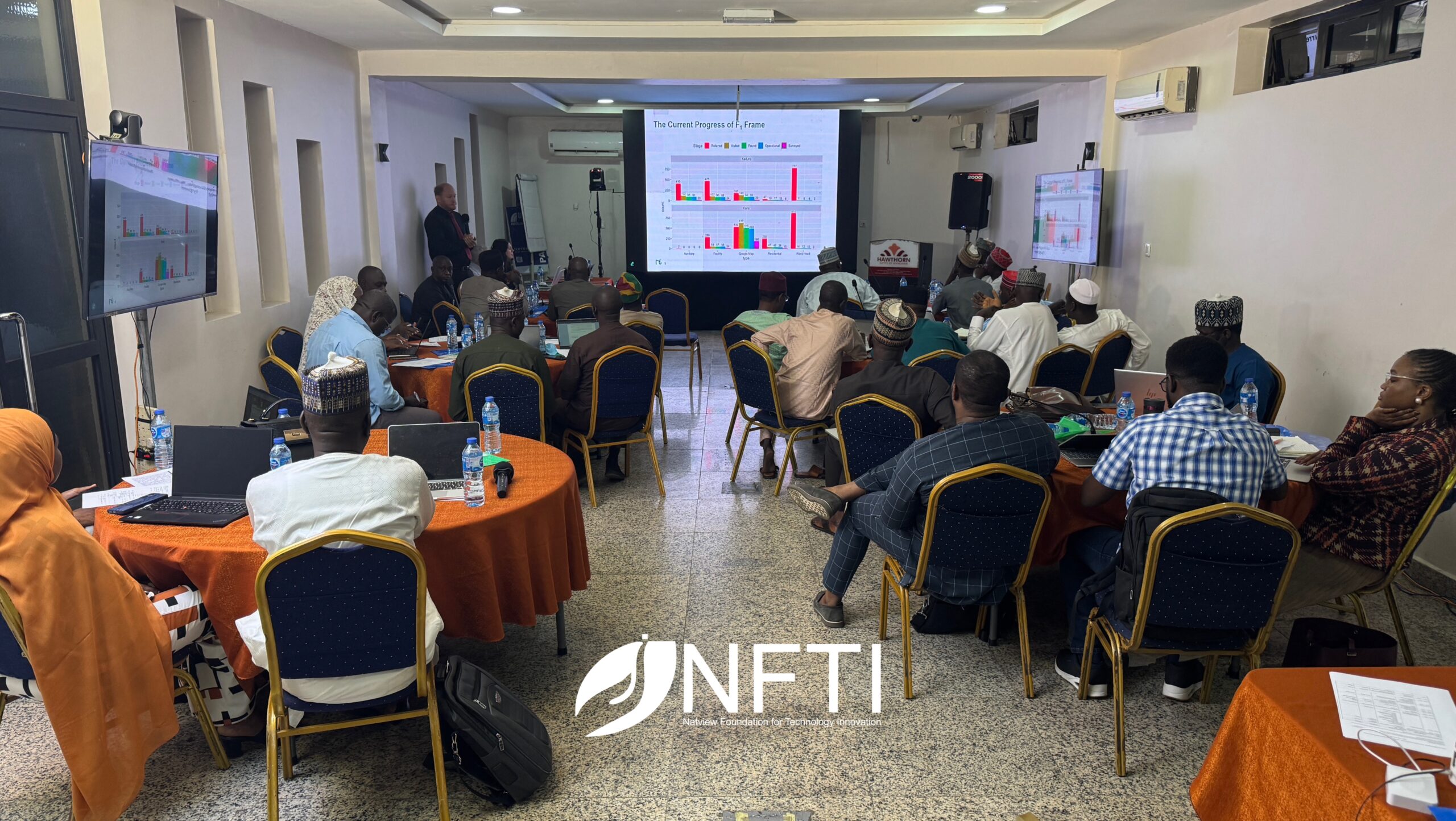
The Natview Foundation for Technology Innovation (NFTI) recently attended the 3-Day Data Analysis Plan (DAP) Workshop for the 2025 Health Facility Census (HFC).The workshop brought together key stakeholders from Kaduna and Kano States in a collaborative effort to refine and validate the draft Data Analysis Plan, ensuring alignment with state-specific priorities, data needs, and preferred reporting formats.
Organized in partnership with technical actors and development agencies, the workshop aimed to build consensus on analytical frameworks and outputs that will guide evidence-based decision-making. It also provided a platform for harmonizing expectations around data disaggregation, visualization, and the practical application of census results to health planning and resource allocation.
Opening sessions featured goodwill messages from directors general of the Kaduna and Kano State Primary Health Care Management Boards, Bureaux of Statistics, and representatives of the Gates Foundation, all of whom emphasized the significance of the 2025 HFC in advancing responsive and equitable healthcare delivery.
Participants engaged in a rich series of presentations and group activities, starting with a review of data collected during the census and an overview of the Data Analysis Plan. Discussions covered essential variables including facility type, ownership, urban-rural classification, staffing levels, and infrastructure. NFTI contributed to sessions that prioritized thematic areas for analysis and proposed practical use cases to ensure that the final outputs are both policy-relevant and accessible to different user groups.
The workshop also applied the RACI-D matrix to clarify roles and responsibilities for data analysis, validation, and dissemination. Comparisons were made between the 2018 and 2025 census data, particularly highlighting progress and gaps in service delivery in Kaduna. For Kano State, a dedicated session was held to review the health facility data component of the state’s statistics dashboard, examining how data visualization supports planning.
NFTI’s participation in the workshop reaffirmed its ongoing commitment to strengthening health data systems, supporting evidence-based planning, and providing technical assistance to states and statistical agencies. By contributing to the shaping of the Data Analysis Plan, NFTI helped to ensure that data generated from the 2025 census will be impactful, actionable, and aligned with the realities on the ground.
