Earlier this year, I and the team organized an International Women’s Day event at the Natview Foundation for Technology Innovation (NFTI), in collaboration with WomenTechmakers and Click-On Data Campus. The event, themed “When Women Build, Society Moves,” brought together women working across technology, data and innovation to discuss the role women play in shaping the systems and technologies that increasingly influence our lives.
We had an impressive line-up of speakers, including Zainab Saidu Idris of WomenTechmakers, Naomi of CoLab, and Joy Victor. What made the event particularly interesting for me was that Zainab and Joy are both alumni of the Click-On Kaduna Data Science Fellowship Programme.
Listening to them speak, particularly Joy’s reflections on women and technology, stayed with me long after the event. One of the points she raised was the importance of women being involved in the development of technology and the systems that govern how it is used. Technology is shaped by the people who build it, and when certain perspectives are missing from that process, the systems we create can fail to adequately account for the people they are intended to serve.
That conversation made me think about data differently. When we talk about encouraging more women to participate in technology, the conversation often stops at getting women into technical roles. We talk about learning to code, becoming a data analyst, working in cybersecurity or entering artificial intelligence. These are important goals, but there is a larger issue at stake.
Women need to be represented wherever data is collected, analysed, interpreted and used to make decisions.Data informs decisions about healthcare, education, agriculture, employment, public services and economic development. Increasingly, it also informs the systems being developed around artificial intelligence and other emerging technologies.
The people who collect and analyse that data influence what questions are asked and what patterns are considered important. The people who interpret the findings influence how those findings are understood. And the people who sit at decision-making tables determine how evidence is ultimately translated into policy and action.
This is why women’s participation in data matters.The case for women’s participation is not that women will always make better decisions than men, or that every woman brings the same perspective. It is that societies are diverse, and the decisions that affect them should reflect that diversity. When people with different experiences and perspectives are involved in decision-making, they are more likely to identify questions, challenges and realities that might otherwise be overlooked. Consider health data. Questions about maternal health, reproductive health, access to healthcare, safety, employment and household responsibilities can look very different depending on who is asking the questions, what is being measured and how the data is interpreted.
The same applies to education, financial inclusion, agriculture and technology.If women are absent from these conversations, there is a possibility that important questions about women’s experiences will not be asked or adequately represented in the data. And when those gaps exist, the policies and systems built from that data can inherit them.This is particularly relevant as Nigeria’s technology ecosystem continues to expand and artificial intelligence becomes increasingly integrated into everyday life. The datasets used to train systems, the problems those systems are designed to solve and the assumptions built into them all require scrutiny.
Women should not only be users of these technologies. They should also be among the people designing them, analysing the data behind them and determining how they should be applied. This is one of the reasons I believe more young women should consider applying for Click-On Kaduna Data Science Fellowship 6.0.
The Click-On Kaduna Data Science Fellowship was established as part of a broader effort to build the capacity of young people in Kaduna State in modern data management tools and strengthen the state’s ability to draw on youth talent for evidence-based decision-making.
The programme has grown considerably since its early cohorts. During the first three years of the grant, three cohorts trained 110 young people between the ages of 18 and 35. The pioneer cohort selected 30 fellows from 6,030 applicants and combined three months of intensive classroom instruction with three months of practical fieldwork. A second cohort trained 40 fellows, while the third brought the total number trained during that period to 110.Since then, DSFP has continued to grow. 150 fellows have graduated across four completed cohorts, with 45 fellows from the fifth cohort set to graduate.
The programme’s outcomes also demonstrate what happens when technical training is connected to real opportunities. About 70% of fellows have transitioned into improved employment or further study, while alumni have gone on to work with organisations including JPMorgan Chase and Deloitte, contribute to government institutions and pursue postgraduate opportunities. For women in particular, the programme’s deliberate approach to inclusion is significant. DSFP has a 50% female participation design standard, ensuring that women are intentionally represented among the young people being trained to work with data.
The fellowship’s commitment to women’s participation also recognises that women are at different stages of their lives and careers. This includes women who are mothers. Having children should not mean that a woman has to step away from opportunities to learn, build new skills or pursue a career in technology and data. Grace, a Click-On Kaduna alumna and mother, is one example of what this can look like in practice.
Watch Grace share her Click-On Kaduna experience on YouTube
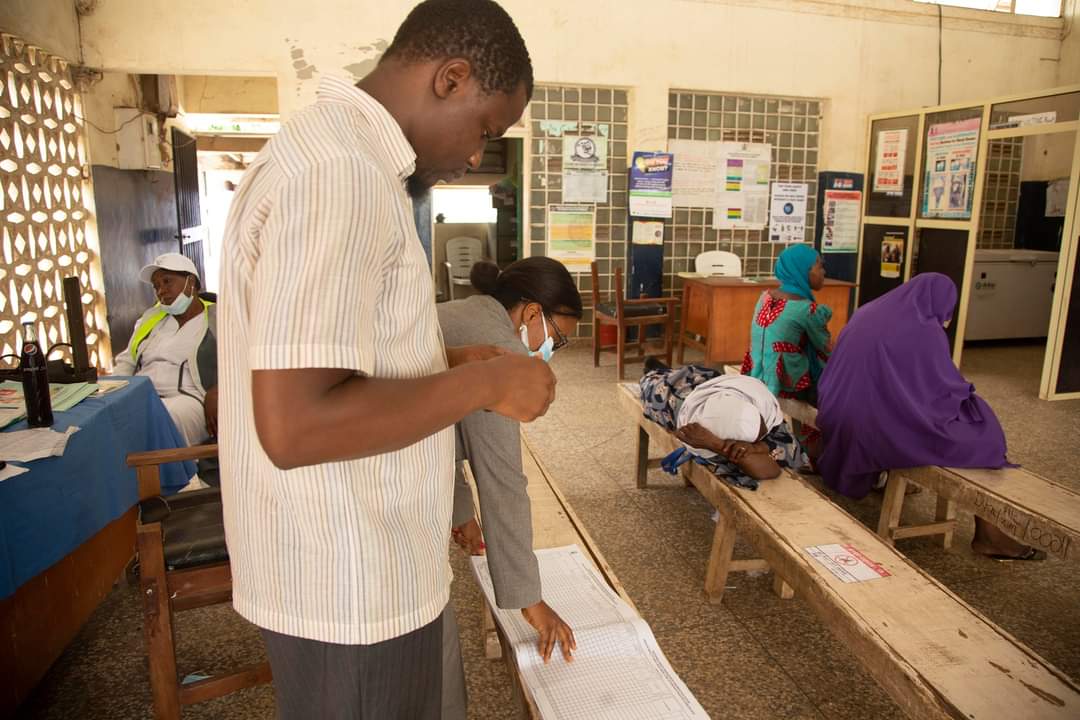
But participation is only one part of the equation. What fellows do with the skills they acquire is equally important. DSFP combines classroom instruction with virtual learning, mentorship, guest lectures, collaborative work and practical field placements. Fellows have opportunities to work with institutions such as the Kaduna State Bureau of Statistics, the State Ministry of Health and the State Primary Healthcare Development Board.
They also have access to specialisation tracks in GIS, Data Engineering, and Machine Learning and Artificial Intelligence.This practical approach is important because data science is not simply about learning software or programming languages. It is about understanding problems, asking the right questions, working with imperfect information, communicating findings and using evidence to support decisions.For young women, gaining these skills can create opportunities beyond employment. It can provide a pathway into spaces where decisions about technology, public policy and development are being made.I have seen examples of this through the women who have come through the programme.
At the International Women’s Day event we organised, Zainab and Joy were not speaking simply as women who had participated in a technology programme. They were contributing their own perspectives to a much larger conversation about how technology is built, who gets to build it and what inclusion should look like in practice.
That is the progression that programmes like Click-On Kaduna can make possible.A young woman can begin with an interest in data and, through training, mentorship and practical experience, develop the technical and professional capacity to contribute to projects, organisations and conversations that influence much more than her own career.There is still considerable work to be done to ensure women are adequately represented across technology and data-related fields. But increasing participation requires more than telling women that technology is a space for them. It requires creating pathways through which they can acquire the skills, experience and networks necessary to participate meaningfully.
That is what makes Click-On Kaduna 6.0 worth considering. If you are a young woman between 18 and 35, interested in data, technology or problem-solving, and looking for a structured opportunity to develop your skills, Click-On Kaduna 6.0 is an opportunity worth exploring.
Registration for Click-On Kaduna 6.0 opens on September 2, 2026. If you are ready to take your interest in data further, learn alongside a community of peers, gain practical experience and develop skills that can open new professional opportunities, we encourage you to apply.
Apply here: Click-On Kaduna Data Science Fellowship
You do not need to have everything figured out before applying. You need an interest in learning, the commitment to complete the programme and the willingness to engage with the opportunities it provides. The decisions that shape our communities increasingly depend on data. Women should have a meaningful role in determining what that data says, how it is interpreted and what is done with it.
Women belong in the room where the data is.
And Click-On Kaduna 6.0 is one opportunity to help more women get there.