
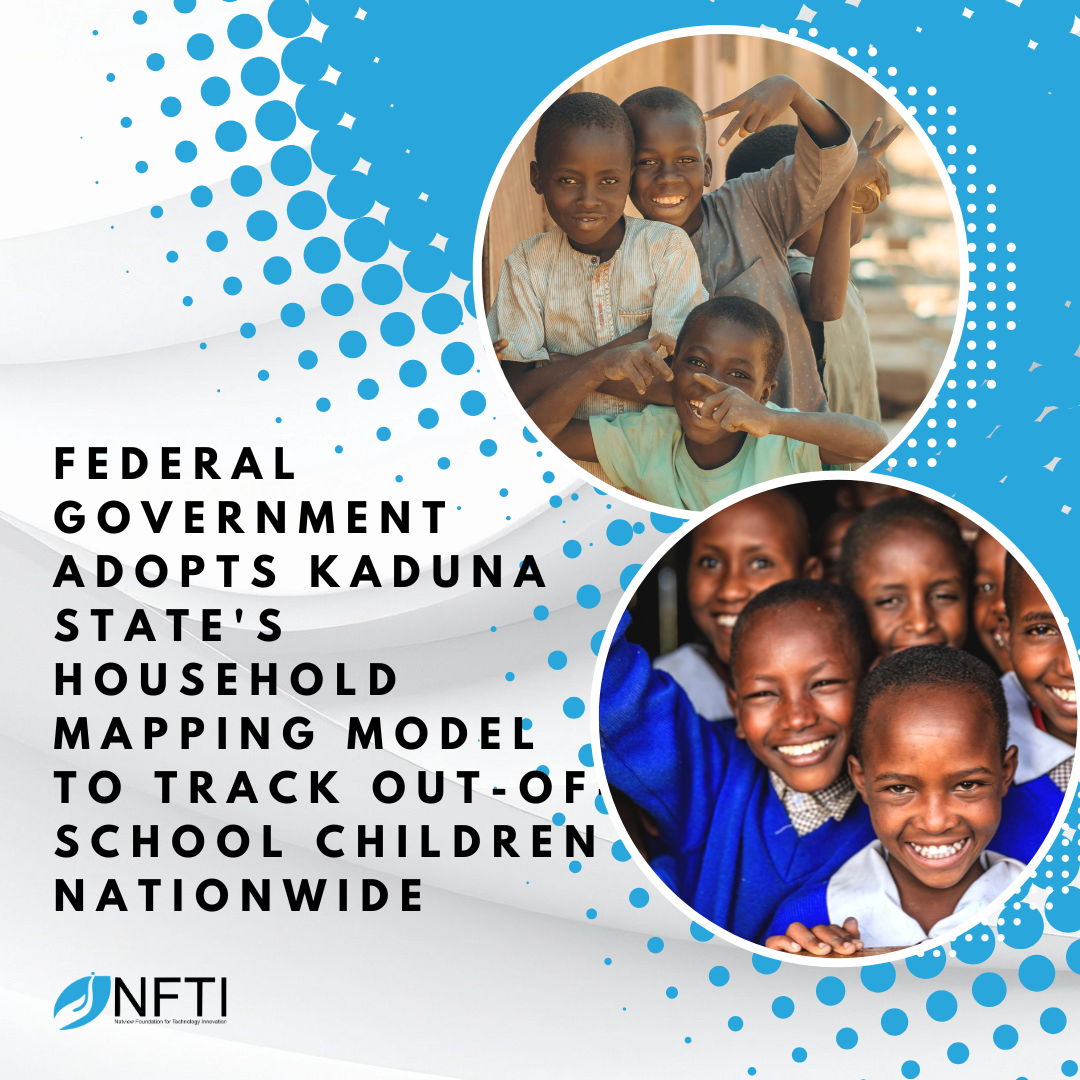
Kaduna’s data-driven approach which helped cut out-of-school numbers from roughly 550,000 to under 180,000 becomes the national standard for identifying and enrolling vulnerable children.
The Federal Government has adopted Kaduna State’s household mapping model as the national framework for identifying out-of-school children across Nigeria, marking a significant shift from estimate-based planning to verified, data-driven interventions in the country’s education sector.
The decision was announced by the Minister of Education, Dr Tunji Alausa, following a meeting with Kaduna State Governor, Senator Uba Sani, in Abuja. Under the new approach, the Federal Ministry of Education will work with the National Bureau of Statistics to carry out a nationwide household mapping exercise across all 36 states and the Federal Capital Territory, aimed at determining the exact number of out-of-school children, where they live, and the households they belong to.
Nigeria has long grappled with one of the world’s largest populations of out-of-school children, a challenge shaped by poverty, insecurity, socio-cultural barriers, and inadequate education infrastructure. Government planning in this space has historically relied on projections rather than verified figures, limiting how precisely resources and interventions could be targeted.
Kaduna State’s household mapping exercise set out to close that gap. By collecting household-level data rather than relying on estimates, the state was able to identify vulnerable children by name and location, guiding targeted enrolment and retention efforts. Governor Sani noted that the initiative has helped reduce the number of out-of-school children in Kaduna State from approximately 550,000 to fewer than 180,000 — a result he described as evidence of what accurate, evidence-based governance can achieve.
Officials say the national rollout will follow the same principle, replacing projection-based planning with verified household data to guide enrolment, resource allocation, and policy decisions. The initiative sits within the Federal Government’s broader agenda for education, which includes the Nigerian Education Data Initiative, school infrastructure upgrades, a student loan programme, and curriculum reforms, all aimed at strengthening data-driven planning across the sector.
A Milestone for Kaduna’s Data Ecosystem
For the Natview Foundation for Technology Innovation (NFTI), the announcement is a moment of pride. NFTI has worked at the intersection of technology, data, and public sector innovation in Kaduna State, supporting institutions and partners committed to evidence-based governance.
Central to this work is a Data Lab grant from the Gates Foundation, implemented by NFTI in direct partnership with the Kaduna State Bureau of Statistics (KDBS). Through the grant, NFTI has supported KDBS in developing a data management framework designed to shift the Bureau beyond its traditional role as a producer of statistics into an active consumer and user of data — embedding data into everyday decision-making rather than treating it solely as an output for external reporting. The initiative forms part of the broader Kaduna State Data Revolution Plan, which positions data as a foundational tool for state planning and service delivery, and includes NFTI’s ongoing work on the Click-On Kaduna Data Science Fellowship Programme (DSFP), which builds local data science capacity in partnership with KDBS.
It is this same data ecosystem-strengthening work — building institutional capacity for the collection, management, and use of accurate, disaggregated data — that underpins the kind of household mapping exercise now being adopted nationally. NFTI extends its congratulations to the Kaduna State Ministry of Budget and Planning Commission and the Kaduna State Bureau of Statistics for their sustained leadership in pioneering the household mapping model — work that has now become the national standard for tackling one of Nigeria’s most persistent education challenges.
The Foundation will continue to provide technical support to strengthen data systems, build digital capacity, and share knowledge that helps translate social innovations into models other states and the country can replicate.
For more information about NFTI’s work in using data for social good and systems strengthening, please contact the Communications Unit.
