

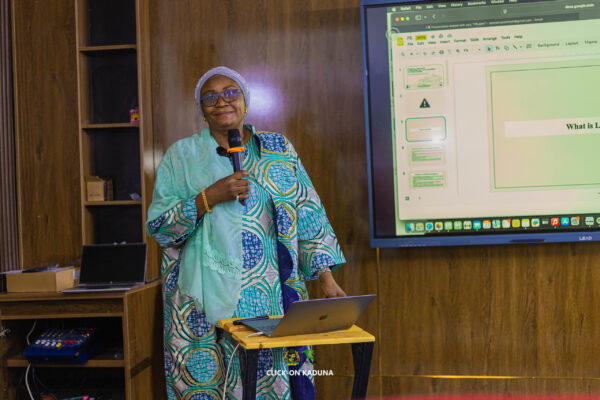
The Guest Lecture Series of the Click-On Kaduna Data Science Fellowship Program (DSFP 5.0) held an impactful session, bringing together fellows and key stakeholders for a timely conversation on the intersection of data and public health.
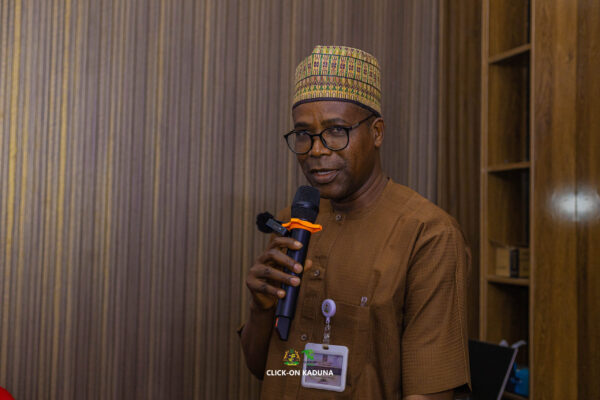
The session opened with remarks from the Statistician General Dr.Bukar Baba Alhaji who underscored the importance of data as a critical tool for effective governance, policy formulation, and sustainable development.
This was followed by a presentation from Aisha Lami Aliyu, who provided a comprehensive overview of the Data Science Fellowship Program from its inception to its current scale highlighting its growth, key milestones, and the expanding global impact of its alumni network.
A major highlight of the session was the guest lecture delivered by Dr. Aishatu Abubakar Sadiq, Permanent Secretary of the Kaduna State Ministry of Health. In her presentation on “Evidence-Informed Leadership and Accountability in Public Health,” she shared practical insights on the role of data in driving decision-making and improving healthcare delivery systems.
Drawing from her experience in public service, Dr. Aishatu emphasized the need for leaders to move beyond technical knowledge and embrace accountability, ethical leadership, and service-oriented thinking in the application of data.
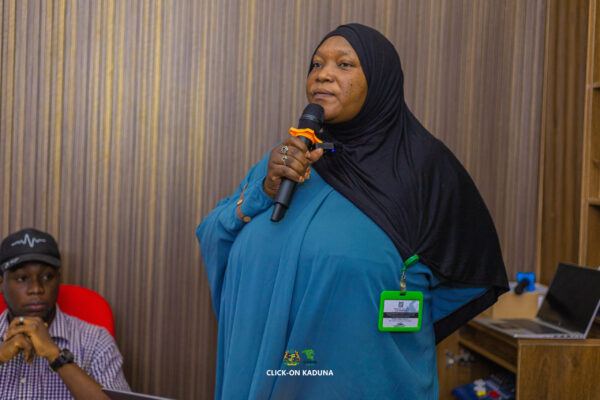
The session also featured an engaging interactive segment, where fellows posed thought-provoking questions on the realities of using data to address healthcare challenges in Kaduna State. The discussion reflected a shared commitment to leveraging data for tangible impact within the health sector.

In her closing reflections, Dr.Aishatu Sadiq left fellows with two essential pillars for a successful career chief among them, humility. She stressed that regardless of technical expertise or professional advancement, humility remains fundamental to continuous learning, collaboration, and meaningful impact.
The DSFP 5.0 Guest Lecture Series continues to serve as a platform for connecting Click On Data Fellows with experienced leaders, reinforcing the importance of evidence-based decision-making in shaping stronger systems and communities.
