
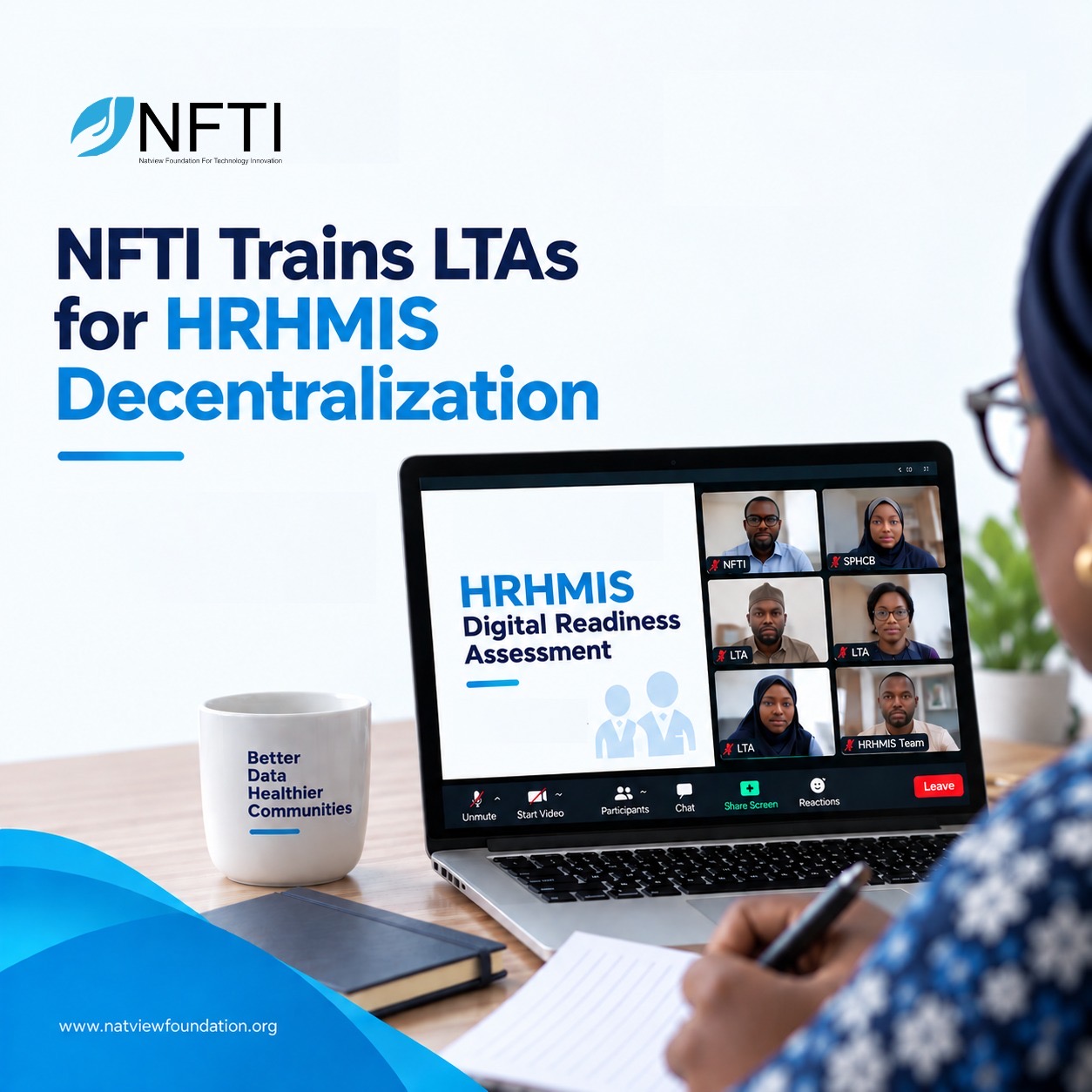
The Natview Foundation for Technology Innovation (NFTI), in collaboration with the Kaduna State Primary Health Care Board (SPHCB), has trained Local Technical Assistants (LTAs) on conducting a Digital Maturity Assessment to determine the readiness of zonal offices and Local Government Area (LGA) headquarters for the decentralization of the Human Resource for Health Management Information System (HRHMIS).
The training brought together LTAs, members of the state HRHMIS team, Deputy Director of Administration, Haj. Rukkaya I. Arab, and administrative officers Salim Sani, Chris Gyams, Salisu Ibrahim, and Surrey Liman.
The assessment is designed to provide a clear picture of the infrastructure and operational conditions available at locations where the decentralized HRHMIS will be deployed. LTAs will visit LGA headquarters and zonal offices to collect information that will help the state and technical teams determine the level of digital readiness at each location.
Key areas of the assessment include the availability of laptops and other digital equipment, internet connectivity, electricity supply, backup power, and security arrangements. The assessment will also examine the reliability of these resources within actual working conditions.
During the training, participants were guided on how to assess electricity availability during working hours, including the number of hours of power available and the reliability of backup power sources. Internet connectivity was also identified as an important component of digital readiness, with LTAs instructed to conduct internet speed tests using the designated tool and accurately document the results.
The team also discussed security measures for digital equipment and the procedures to follow in the event of theft or loss. LTAs were encouraged to document existing security arrangements at each location, providing the context needed to understand how equipment and other HRHMIS resources can be managed and protected.
The assessment will also support the return and handover of biometric equipment to health facilities. Participants were reminded to complete the required handover checklist and obtain signatures from facility in-charges and health secretaries to ensure that the movement and custody of equipment are properly documented.
A major focus of the training was the importance of collecting accurate data and documenting the context behind each finding. LTAs were advised against making assumptions about the readiness of a location and were encouraged to record the actual conditions they encounter during their visits.
The team will use QR codes to access the data collection tools and submit information from the field. Accurate data entry was emphasized throughout the training, as the information collected will contribute to decisions around deployment, infrastructure requirements, and support for different locations.
The Digital Maturity Assessment is part of the broader preparation for decentralizing the HRHMIS. The system, which currently supports key human resource processes at the state level, is being expanded to enable greater participation and responsibility at LGA and zonal levels.
The assessment will therefore provide an important evidence base for understanding what each location has in place before the system is deployed. It will help identify locations that have the required infrastructure, highlight areas where gaps exist, and provide information that can guide the support needed for effective implementation.
With LTAs serving as the link between the technical team and the locations being assessed, the quality of the information collected will be central to the decentralization process. The exercise is intended to ensure that decisions around HRHMIS deployment are informed by the actual conditions across the health system.
Through its continued technical support to SPHCB, NFTI is contributing to the development of a more decentralized and responsive HRHMIS, using data and evidence to support the expansion of digital systems for health workforce management across Kaduna State.
