
A Special Report on Public Sector Innovation by Iyanda Ayobami, Program Officer, GIS & Spatial Analytics, NFTI.
A train-the-trainer session by the Natview Foundation for Technology Innovation (NFTI) equips the Kaduna State Bureau of Statistics (KDBS) to manage the state’s administrative statistics on a customized, world-class open-data platform and offers a model that the rest of Nigeria may soon want to follow.
KADUNA, NIGERIA
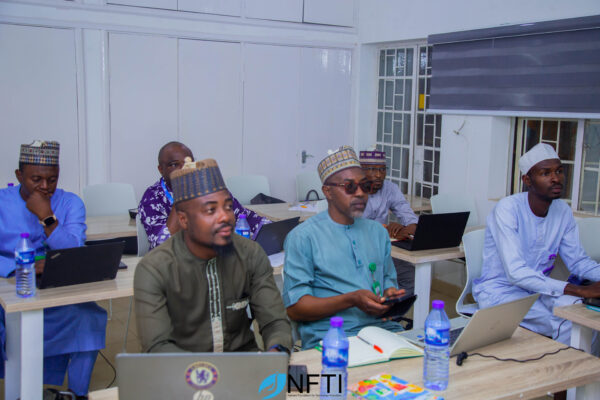
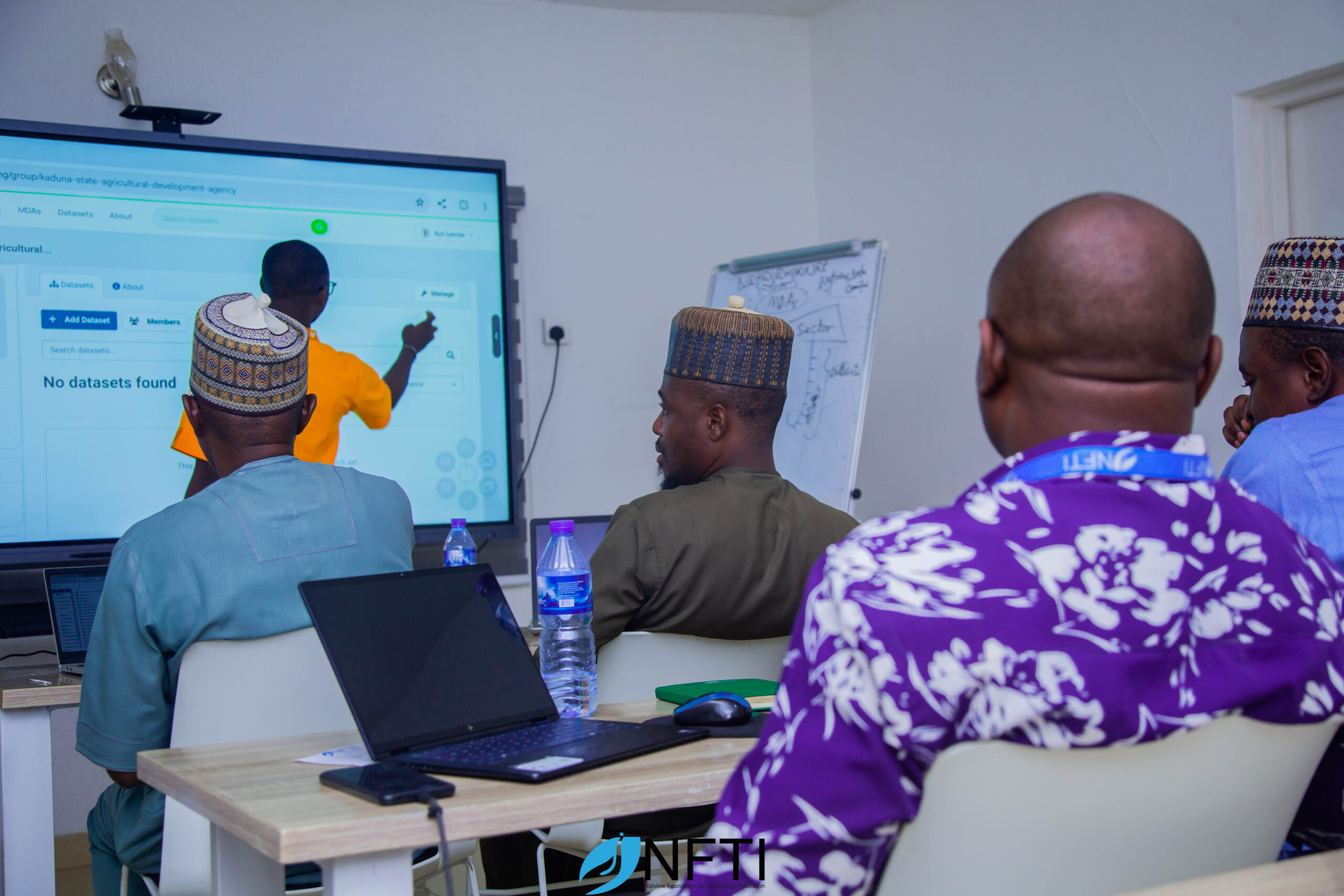
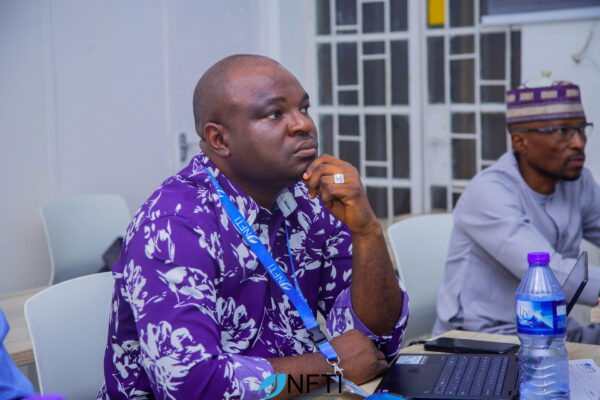
Participants at the NFTI-KDBS train-the-trainer session
For years, the story of government data in Kaduna State, as in much of Nigeria began with paper. Every reporting cycle, the Economic and Social Statistics Department at KDBS designed and rolled out data collection templates to ministries, departments, and agencies (MDAs) across the state, with a window of days or weeks in which each MDA was expected to fill in the figures and return them. It was a system that worked, in the way that a system can work while quietly costing everyone who touches it.
THE WEIGHT OF PAPER
Picture the routine: an officer in an MDA, handed a printed or emailed template, manually transcribing enrolment numbers, patient counts, revenue figures, or farm outputs from ledgers and field notes. The completed template travels back to KDBS, sometimes late, sometimes incomplete, sometimes in a format that does not quite match what the next MDA sent in. Then comes the second labour, KDBS staff re-keying paper and spreadsheet submissions into digital form, cleaning inconsistencies, chasing missing figures, and reconciling formats before a single chart or report can be produced.
It is a process that consumes time and energy that could be spent on analysis rather than data entry, and one where transcription, at every hand-off, opens the door to error. A misread figure, a transposed digit, a missed submission deadline, multiplied across dozens of MDAs and eleven sectors of government, the margin for distortion in the numbers that inform policy grows wide. And administrative statistics, more than most data, cannot afford to be wrong because government decisions about schools, clinics, roads, and budgets are only as sound as the data beneath them.
“The numbers that guide government decisions are only as reliable as the process that produces them.”
A PLATFORM BUILT FOR A BETTER WAY
This is the problem the new KDBS platform was built to solve, rather than paper templates and manual re-entry, MDA officers now log directly into a digital workspace and enter their data at the source. Each submission moves through a structured pipeline; direct data entry, verification against sector standards, formal approval by KDBS, and archival within a searchable, permanent repository ready for analysis, reporting, and public use. What once took weeks of back-and-forth now happens in a single continuous flow, with the record of every dataset preserved for reuse rather than buried in a filing cabinet.
The platform is powered by CKAN, an open-source data management system that has quietly become one of the world’s most trusted pieces of public data infrastructure. Originally developed by the Open Knowledge Foundation, CKAN has been formally recognized as a Digital Public Good for advancing the United Nations’ Sustainable Development Goals, and it now underpins national and regional open data portals across North America, Europe, Asia-Pacific, and Africa, as well as data systems used by enterprises in energy, finance, and pharmaceuticals. Kaduna State’s platform joins that global lineage, not as an off-the-shelf import, but as a system deliberately customized around how Kaduna’s government is actually structured.
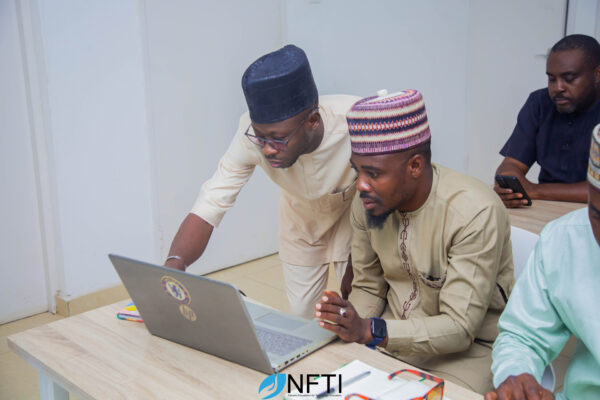
KDBS officers being walked through the CKAN dashboard
BUILT AROUND KADUNA’S OWN STRUCTURE
At the heart of the platform is a simple but powerful organizing idea, eleven sectors: Agriculture; Education; Environment and Natural Resources; Governance and Administration; Governance: Local Government; Governance: Revenue and Mobilization; Health; Infrastructure Development; Security, Law and Justice; Social Development; and Trade and Investment each housing the MDAs responsible for generating its data. Every dataset is classified by sector and source agency from the moment it is submitted, so that a policymaker searching for education statistics, or a researcher tracking local government performance, finds verified, correctly labeled data without wading through the unrelated.
Among the platform’s core features:
▪ Sector and MDA classification for every dataset
▪ Direct online submission, replacing paper templates
▪ Structured verification and approval workflow
▪ Permanent, searchable archive for analysis and reporting
▪ Live progress tracking of MDA submissions
▪ Public search and open access to published data
TRAINING THE TRAINERS
It was to bring this system to life that the Natview Foundation for Technology Innovation (NFTI) convened a train-the-trainer session for KDBS staff, a deliberate choice of format. Rather than a one-time orientation, the session was designed to build a corps of KDBS officers who can operate the platform confidently and, in turn, guide MDA officers through it as onboarding expands. The two-day session walked participants through dataset creation and metadata standards, sector and MDA classification, verification and quality checks, and the administrative tools KDBS will use to review and approve submissions before they go live.
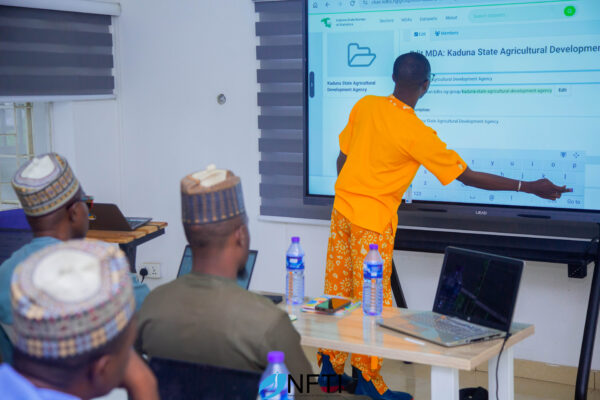
Hands-on session where officers are working through live data entry on the platform
BEHIND THE SYSTEM
A platform of this kind does not build itself, its architecture showing the sector-and-MDA structure, the verification workflow, the dashboards that track submission progress was configured by the CKAN Implementation and Analytics team working under the Natview Foundation for Technology Innovation (NFTI). The engineering that carried that design into a stable, secure, and fully customized system was delivered by the Tech team of Natview Technology (NT), whose work spanned deployment, system administration, and platform configuration. Together, these teams turned a globally proven open-source foundation into a tool built specifically for how Kaduna State works.

Representatives of NFTI team
A MODEL WORTH WATCHING
What is happening in Kaduna is bigger than one training session, it is a demonstration that the shift from paper-based administrative statistics to a verified, digital, sector-organized system is achievable not as a distant aspiration, but as a working platform already in the hands of trained officers. For a country where many State Bureaux of Statistics still depend on templates, transcription, and time-consuming manual reconciliation, Kaduna’s experience is an invitation that the tools to modernize administrative data collection exist, they are proven across dozens of countries, and they can be tailored to the exact structure of any government that is ready to make the change.
As KDBS moves toward full MDA onboarding across all eleven sectors, the state is building more than a database. It is building the evidentiary foundation on which sound policy, public accountability, and citizen trust are made possible and setting an example that other state bureau of statistics in Nigeria, and beyond, may soon find hard to ignore.
