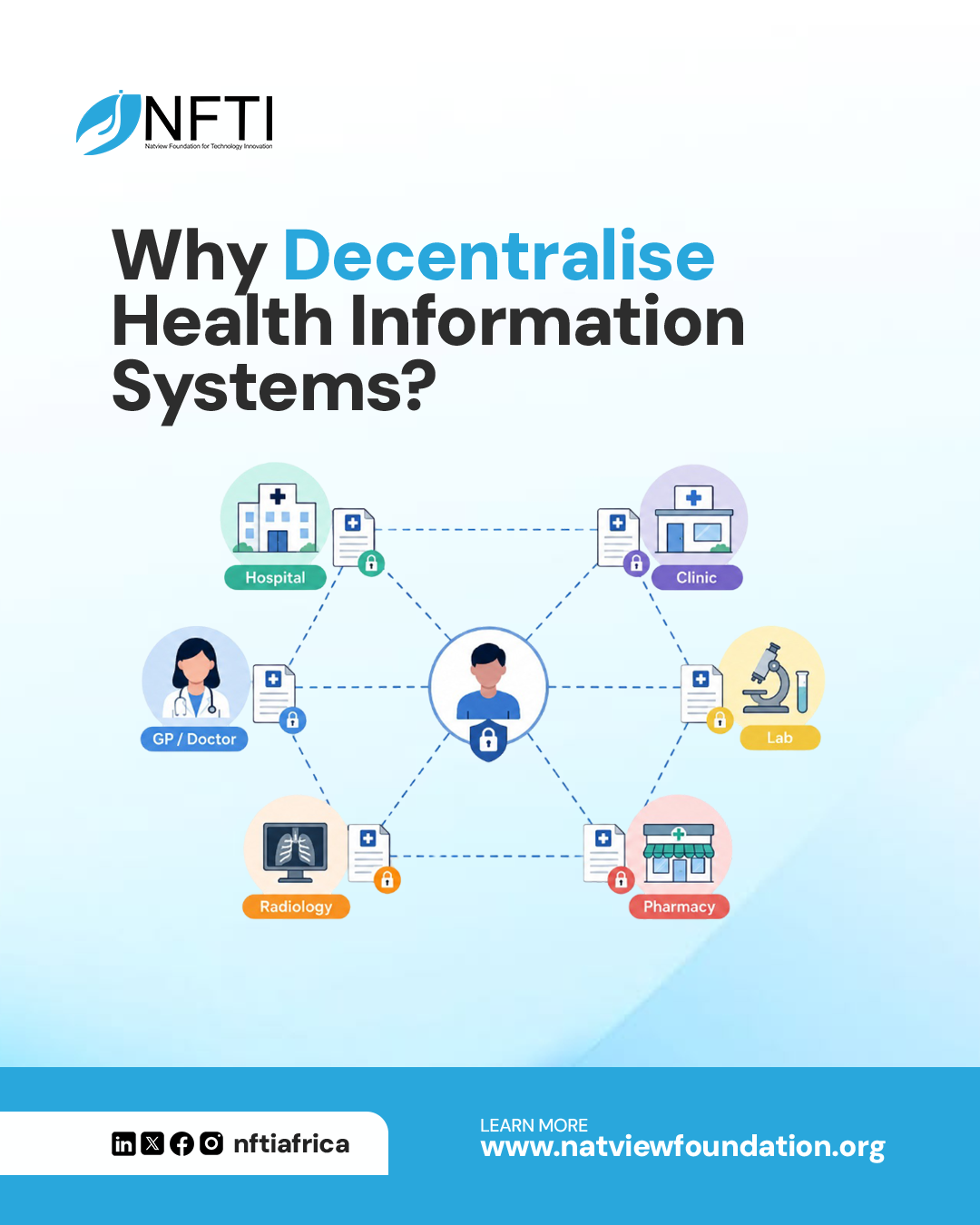
Health information systems are often discussed in terms of the technology behind them: the platform, the dashboard, the devices, or the data they produce. But the effectiveness of any health information system ultimately depends on something more fundamental: how well it fits into the way people and institutions actually work.
This is particularly important when the information being managed concerns the health workforce.
For Kaduna State, managing information on health workers requires visibility across a large and complex system. Staff are distributed across Local Government Areas (LGAs), zonal offices and health facilities, while important human resource processes such as transfers, leave, records and talent management require coordination across different levels of the system.
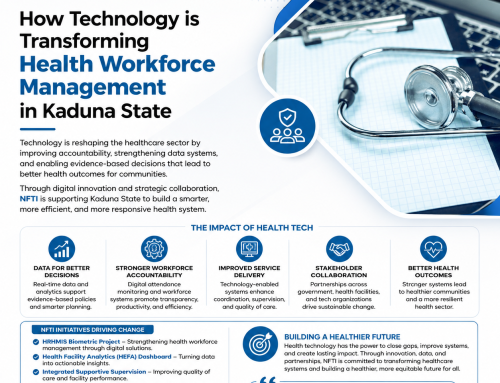
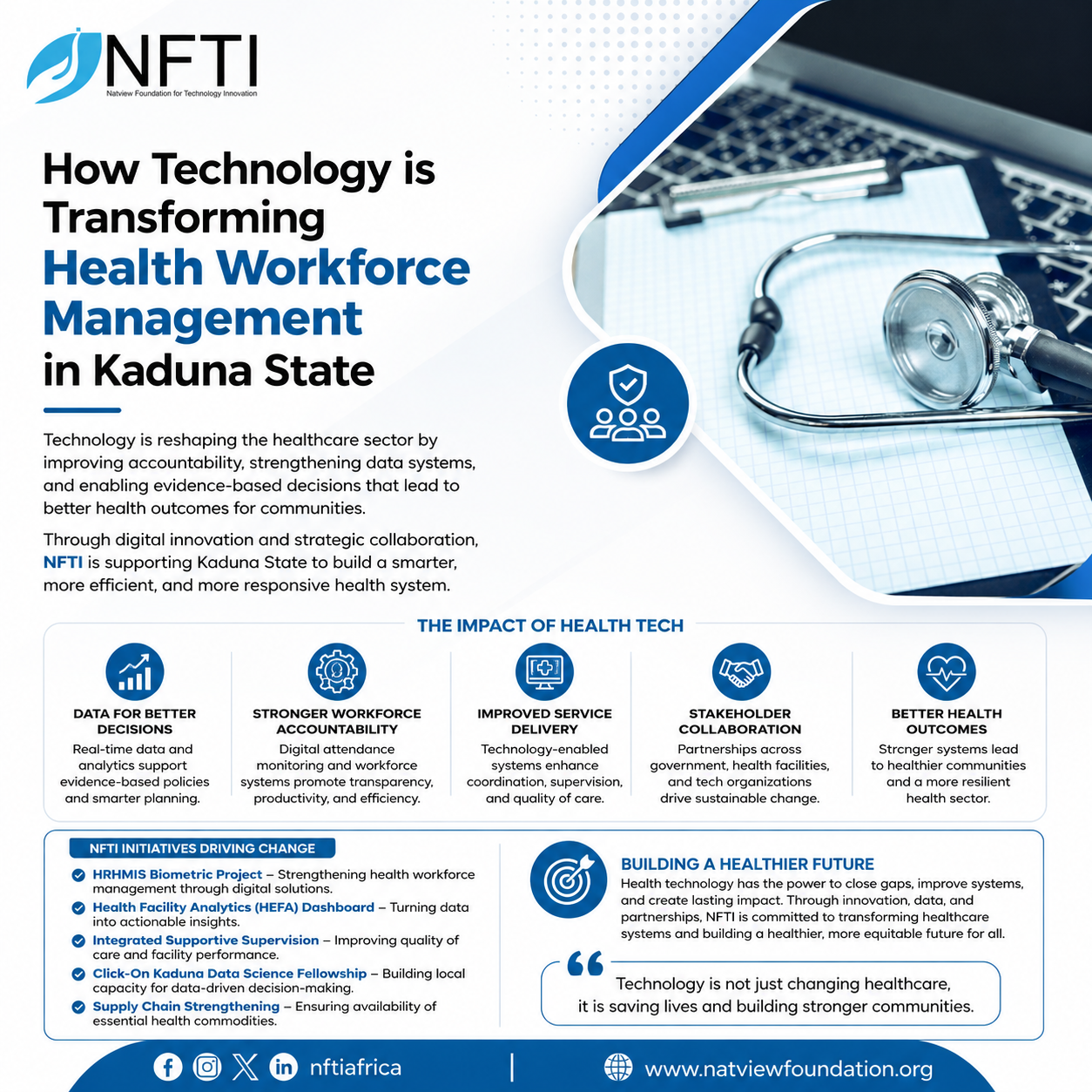
The Human Resource for Health Management Information System (HRHMIS), developed with technical support from the Natview Foundation for Technology Innovation (NFTI), was designed to support these processes and improve how the Kaduna State Primary Health Care Board (SPHCB) manages information about its workforce. The system includes modules for Transfer Management, Leave Management, Records Management and Talent Management.
The next phase of this work is the decentralisation of HRHMIS, with greater participation and responsibility at the LGA and zonal levels.
At first glance, decentralisation may sound like a straightforward technology upgrade: give more people access to the system and allow them to perform more functions. In practice, it is more involved than that.
It requires understanding what is happening at each level of the health system, determining whether the necessary infrastructure is available, clarifying responsibilities, reviewing business processes, and ensuring that the people expected to use the system are equipped to do so.
This is where the real value of decentralisation lies.
A centralised system can provide consistency and oversight. However, when processes are managed primarily from the state level, there can be considerable distance between the people managing the system and the people closest to the information.
An LGA headquarters, for example, is closer to the facilities and health workers within its area than a state-level office. It has a more immediate understanding of its workforce and the administrative processes taking place within the LGA.
Decentralising HRHMIS creates an opportunity for the system to reflect this reality.
Instead of information moving primarily upwards to a central point for processing, the different levels of the health system can take on defined responsibilities within the system. This can make routine processes more accessible to the people responsible for managing them, while allowing the state to maintain the oversight required for workforce planning and coordination.
The objective is not to remove the state level from the process. It is to create a system in which the state, zones and LGAs can perform their respective roles more effectively.One of the clearest lessons from digital health implementation is that a system cannot simply be deployed everywhere in exactly the same way. Infrastructure differs. Power supply differs. Connectivity differs. Equipment and technical capacity differ. Even the way administrative processes are carried out can vary from one location to another.
For this reason, NFTI and SPHCB have approached the decentralisation of HRHMIS by first assessing the readiness of the locations where the system will be deployed.NFTI recently trained Local Technical Assistants (LTAs) to conduct a Digital Maturity Assessment across LGA headquarters and zonal offices. The assessment is intended to establish what infrastructure and operational conditions exist at each location before decentralised HRHMIS deployment takes place.
Rather than assuming that every location is equally prepared, the assessment is designed to provide evidence about the actual conditions on the ground. LTAs are expected to document what they find, including infrastructure and operational gaps, rather than making assumptions about whether a location is ready.The information collected will help guide decisions around deployment, infrastructure requirements and the support that different locations may need.
In other words, decentralisation is being informed by data before the system is moved.That approach matters because a digital system is only as useful as the environment in which it operates.There is another important part of decentralisation that can easily be overlooked: business processes.
Digitising a process does not automatically make that process clear or efficient. If responsibilities are unclear, moving the process into a digital platform can simply reproduce those challenges in a new format.
HRHMIS was developed around specific human resource processes, including records management, transfers, leave and talent management. As these functions become more decentralised, the processes behind them have to be clear.Users need to understand what happens at the LGA level, what remains at the zonal level, what requires state-level action, and how information moves between these levels.
This is why decentralisation involves organisational change as much as technological change.The platform is one part of the system. The people using it, the processes they follow and the institutional arrangements around it are equally important.
The value of decentralised HRHMIS ultimately comes down to what better access to information enables health system managers to do.
At the most basic level, it can improve access to workforce information at the level where many administrative decisions are being managed. At a broader level, it can strengthen visibility across the health workforce.
The HRHMIS has been developed to support information on health workers, including workforce distribution and other personnel information needed for planning. This is important because workforce decisions depend on knowing where health workers are, how they are being managed and what is changing within the system.When information is available across the appropriate levels of the system, managers can work with a more current picture of their workforce rather than relying entirely on information that has to move through multiple administrative layers before it can be accessed.
This does not mean that decentralisation will solve every workforce management challenge. It does mean that the system can create better conditions for identifying issues, managing routine processes and making decisions based on information that is closer to the realities of implementation.Giving more people access to a system is only useful when those users are able and willing to take responsibility for the information they manage.
This makes capacity building an important part of the transition.The recent training of LTAs illustrates this. Their role is not limited to technical support. They also serve as a link between the technical team and the locations being assessed, ensuring that information about the readiness of each location is accurately captured and documented.
This local capacity is important because decentralisation changes the relationship between users and the system.The goal is not to create a situation where LGAs and zonal offices continue to depend entirely on the state or an external technical partner to manage routine processes. Instead, decentralisation should strengthen the ability of institutions at each level to manage the responsibilities assigned to them.That is also why sustainability has been an important consideration in the broader HRHMIS work.
Earlier in the HRHMIS implementation, the biometric component transitioned to state ownership after its pilot implementation across 23 selected Primary Health Centres. The handover included the transfer of operational responsibility, review of Standard Operating Procedures and provision of an operational manual, alongside a period of technical handholding for state teams.The lesson is relevant to decentralisation as well: digital health systems have to be built around institutional capacity and ownership, not permanent dependence on technical partners.
There is often a tendency to measure the success of digital health projects by the amount of data a system can collect.But more data is not necessarily more useful data.The more important question is whether the information reaches the people who need it, in a form they can understand and use, at the point where decisions have to be made.This is particularly relevant to human resource management.
Knowing how many health workers are recorded in a system is useful. Knowing where they are, understanding the processes affecting their deployment and records, and being able to use that information to plan and manage the workforce is much more valuable.Decentralisation can help close that gap between having information and being able to use it.
For Kaduna State, the decentralisation of HRHMIS provides an opportunity to build a health information system that reflects the structure of the health system itself: one in which responsibility exists at multiple levels, while information can still support coordination and decision-making across the system.The decentralisation of HRHMIS is ultimately less about moving a digital platform and more about adapting information management to the realities of the health system.
It requires knowing what each location has, understanding what each level is responsible for, identifying gaps before deployment, strengthening the capacity of users and ensuring that the processes supported by the technology are clear.
That is why the Digital Maturity Assessment is an important part of the process. It provides an evidence base for deciding what different locations need rather than treating readiness as a given.
If successful, the result will not simply be a system that more people can log into. It will be a system in which information can be managed closer to where it is generated, responsibilities are clearer, and health workforce managers at different levels have better access to the information required to do their work.For a health system, that distinction matters.
The question is not whether data has moved closer to the people. The question is whether decision-making has become better because it did.