
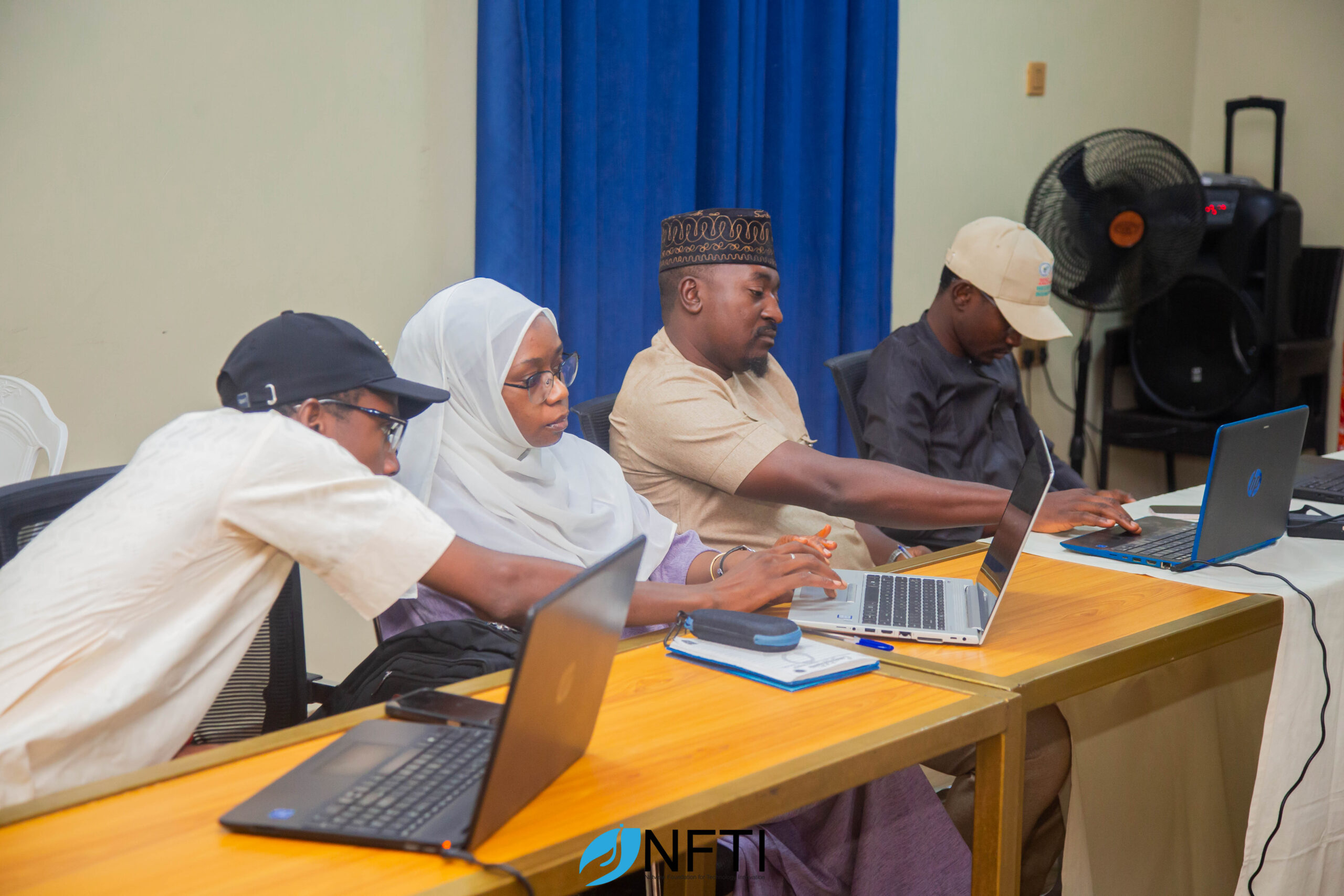
A two-day training equips headquarters staff with the records, oversight, and reporting tools they need to support LGA teams now managing workforce data on the HRHMIS.
ZARIA, Kaduna State, 18 November 2026
Admin Officers from the headquarters of the Kaduna State Primary Health Care Board (SPHCB) have completed a two-day training on the Human Resource for Health Management Information System (HRHMIS). The training was held on 13 and 14 November 2026 at the R and K Guest Palace Hotel Conference Hall in Zaria and was facilitated by the Natview Foundation for Technology Innovation (NFTI).
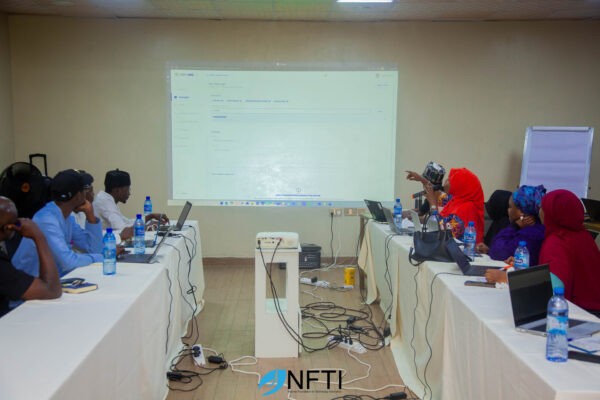
Cross Section of Participants
The session followed a three-day training for 60 Health Secretaries, Deputy Health Secretaries, Admin and M&E Officers from 15 LGAs in Zone 1 and Zone 2. With LGA teams now recording workforce transactions directly on the HRHMIS, headquarters training ensures that officers who oversee the State’s health workforce records work from the same system, with the same skills.
The Center of a Decentralized System
Decentralization moves workforce data capture closer to where decisions are made. It does not remove the need for strong oversight at the center.
As LGA officers initiate and approve leave, transfers and training records, headquarters remains responsible for the integrity of the State’s workforce data as a whole. That includes resolving duplicate records, managing and maintaining staff documents, and producing the reports that inform workforce planning and policy.
The headquarters training was designed around those responsibilities. Its curriculum went beyond the LGA program to cover the functions that keep the system accurate and accountable at state level.
The training opened with remarks from the Deputy Director, Admin and HR, SPHCB. Maryam Onubaye of NFTI then led an overview of the HRHMIS and its analytics, covering workforce profiling, retirement projections, gap workforce analysis, attendance analytics and HRH financing.
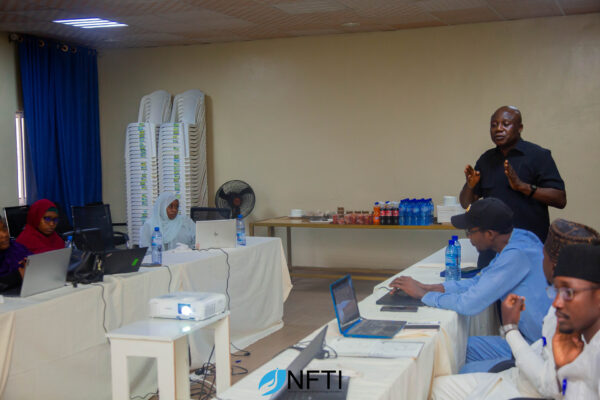
Deputy Director, Admin and HR, SPHCB During the Training Session
The final sessions introduced advanced reporting, giving headquarters staff the tools to draw workforce insights from data entered across the LGAs.
For Shamaki, Deputy Director, Human Resource, SPHCB, the training gives the officers who will run the system day-to-day the practical skills to strengthen health workforce data for evidence-based policymaking.
“This is hands-on training on the HRHMIS for the HR Admin Officers who will be working on the system. The HRHMIS is wonderful, particularly for staff data. It has captured both biometric data and staff documents, so file discrepancies are now easily resolved.”
He pointed to the platform’s value for workforce planning.
“It also helps with programmatic training. It helps us understand the capacity of our staff and what we have in stock: who has been trained, and who needs to be trained in a particular field. That helps us project better on human resources for the future.”
He also highlighted its effect on accountability and cost.
“What the HRHMIS has totally resolved is the issue of absenteeism. People are up and doing now, and everyone does the needful. It has also replaced the manual retirement process, saving funds for government.”
Digitizing routine human resource processes improves speed and accuracy, makes every transaction traceable, and gives managers more time to focus on service delivery. With headquarters and the LGAs now working on one system, Kaduna State is better placed to plan, deploy and support its primary health care workforce.
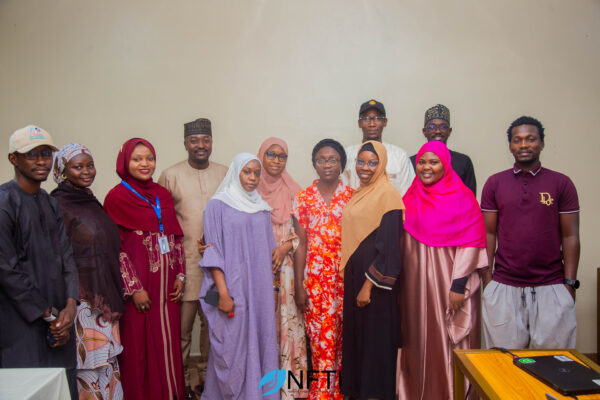
Group Photograph with SPHCB HQ Admin Officers and NFTI Team
